Aiden Adds Full-Duplex Voice and Interruptible Agent Tasks
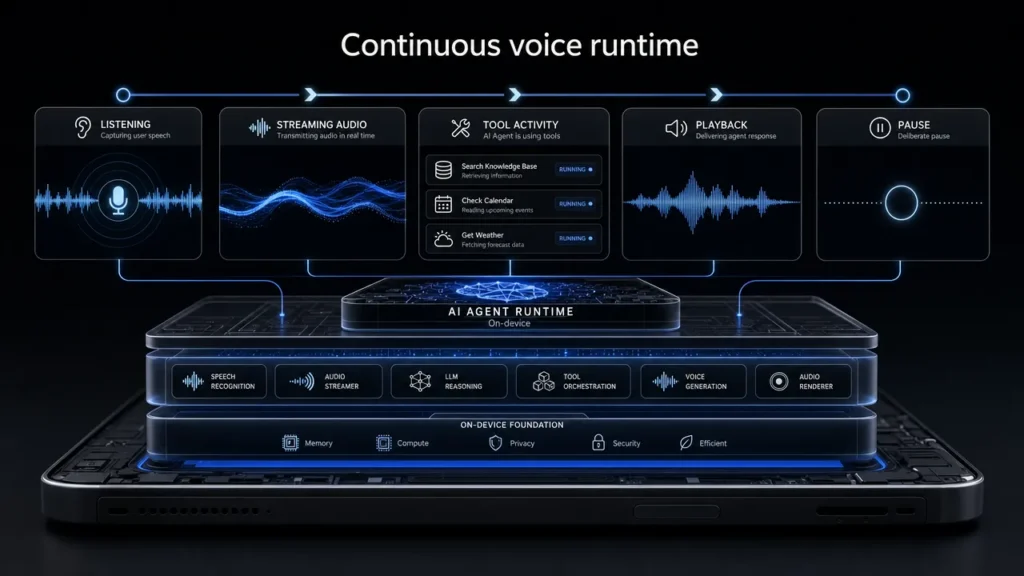
Major Update: Aiden firmware now adds a full-duplex AI agent runtime, giving you a more continuous voice interaction path and clearer control when an Agent is active, using tools, or waiting on a person to take an action.
How the full-duplex AI agent reduces interaction friction
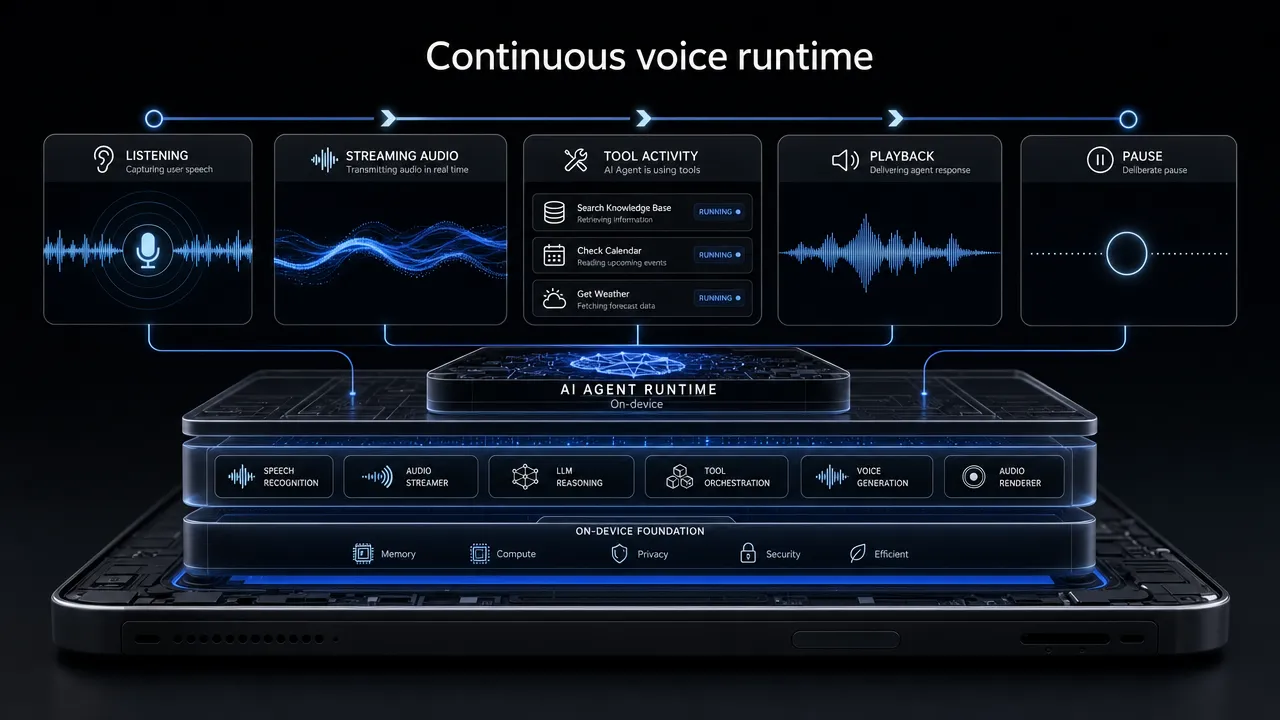
Voice workflows can become awkward when listening, playback, and Agent work behave like separate, fixed turns. This firmware change reduces that friction by supporting an active interaction that can continue through listening, streaming audio, Agent activity, playback, tool calls, and an intentional interruption.
For developers building real-device experiences, that means an interaction no longer needs to be framed as a request that must finish before the user can respond again. The updated runtime provides a control path for deliberate interruption while the Agent is active. It does not imply that every interruption is automatically understood, or that any external action caused by a tool call can be reversed.
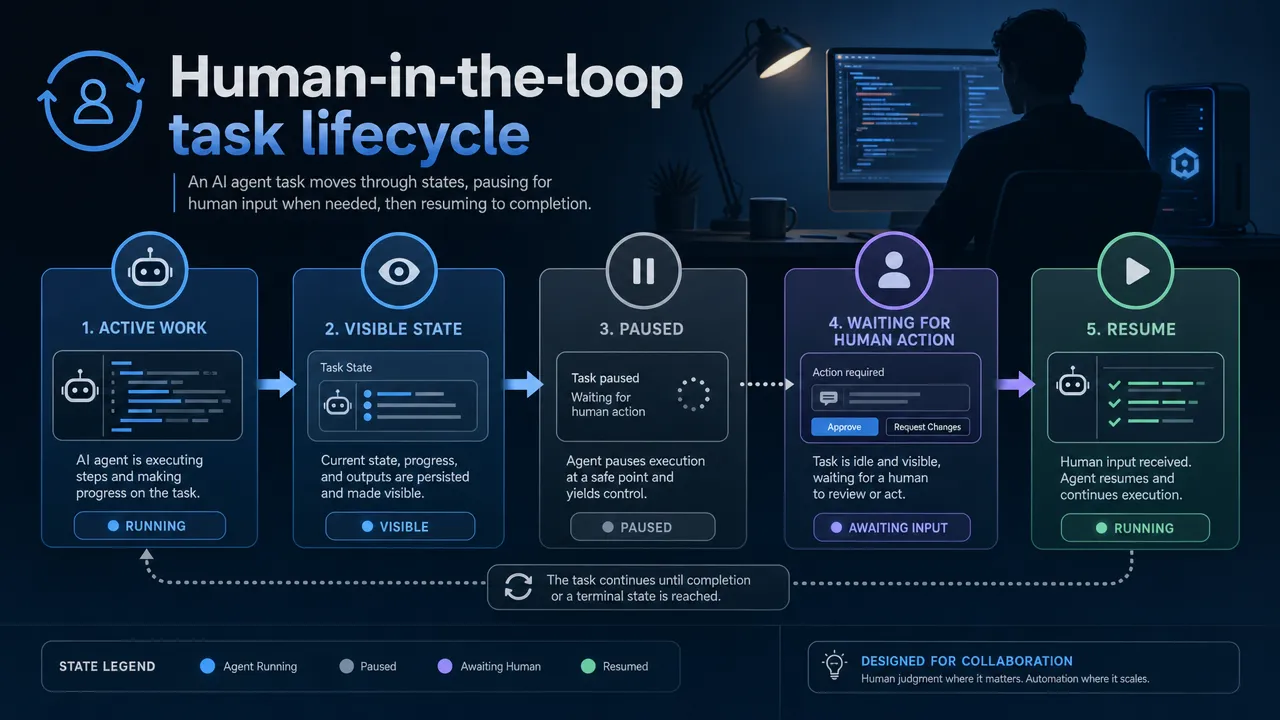
The same improvement applies to longer-running work. Rather than treating a human handoff as an abandoned run, a task can expose its state, pause, wait for a user action, and resume after that action is available. This creates a more practical lifecycle for flows where the Agent needs a person to confirm, provide, or complete something before work can continue.
What changes in Aiden for a full-duplex AI agent
The merged firmware change set introduces a full-duplex AI agent runtime alongside real-time voice wake, streaming audio, tool-call interruption, background-task cancellation, and pause/resume behavior.
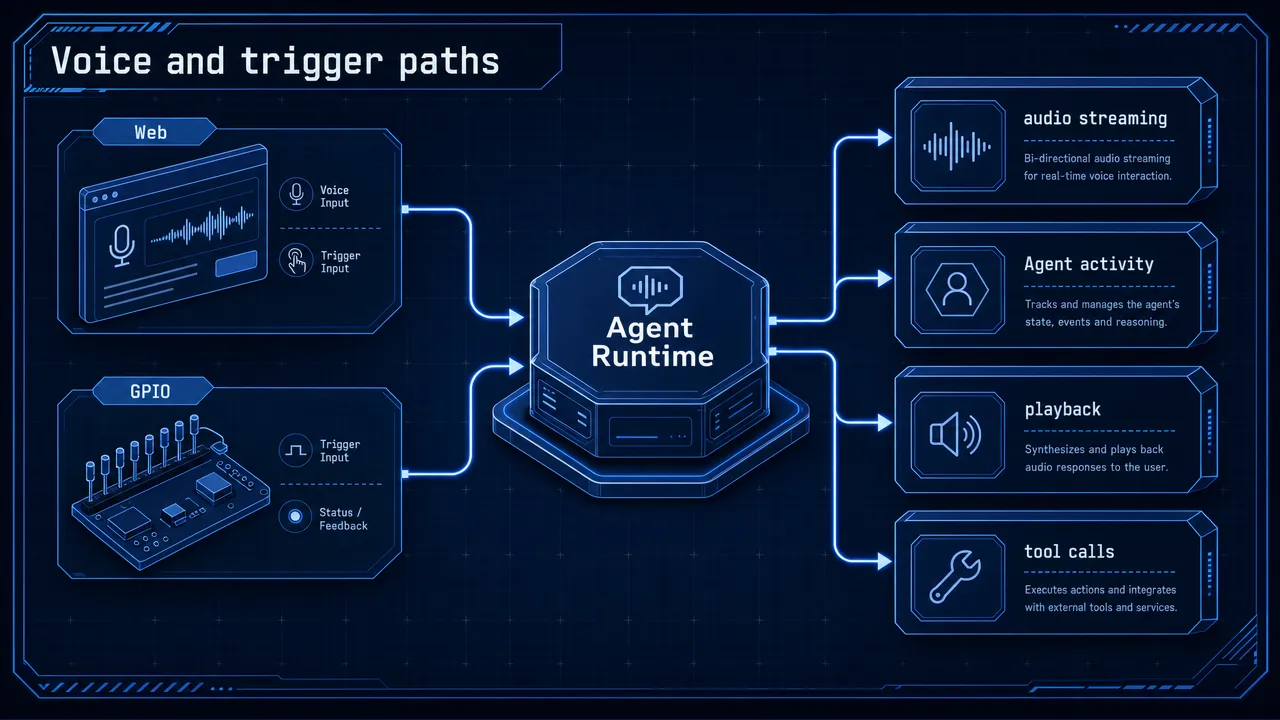
Real-time interaction can begin through either a Web trigger path or a GPIO trigger path. These are distinct entry routes: the Web path provides a Web-originated trigger, while the GPIO path is the device-oriented trigger route. STT now defaults to the GPIO wake path and requires the corresponding hardware conditions.
Together, these capabilities support a real-time voice agent experience in which the Agent can remain active across voice input and output instead of treating an interaction as a single completed exchange. Streaming audio supports the live interaction path, while tool-call interruption gives the runtime a way to stop tool activity during an active interaction.
The combined work is represented by PR #566, PR #555, PR #573, PR #576, and PR #577. These PRs should be read as one merged update set rather than as separate claims that assign a single capability to one PR.
What you can do now with a full-duplex AI agent
You can design interactions around control states rather than an all-or-nothing voice exchange. A user can intentionally interrupt an active interaction, and the runtime includes a path to interrupt tool calls. Background work can also be canceled through the updated task lifecycle.
These interruptible AI tasks are distinct controls. Interrupting a foreground voice interaction is not the same as stopping a tool call, and neither is identical to canceling background work. The update provides these control paths without promising rollback for work that has already produced an external side effect.
For long-running workflows, Aiden can expose task state, pause when human involvement is needed, wait for a user action, and resume afterward. This is especially relevant when you are building Agent flows that should visibly hand off to a person instead of continuing without the needed action. Resumption is a supported lifecycle behavior, not a guarantee that every task completes under every condition.
Follow the full-duplex AI agent firmware work
Follow the Aiden firmware repository for ongoing implementation work, and join the Aiden Discord to follow the project with the community.
Related posts
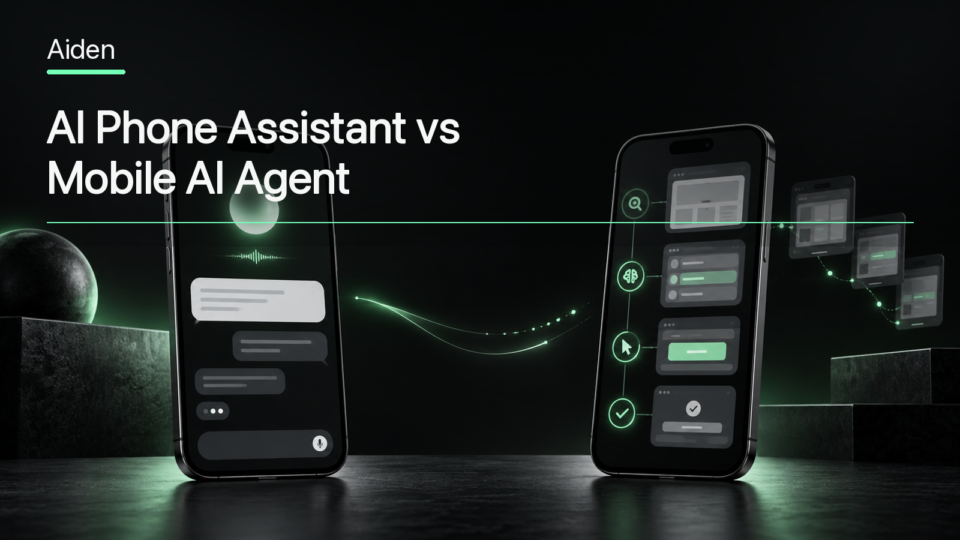
AI Phone Assistant vs Mobile AI Agent: What’s the Difference?
AI phone assistant vs mobile AI agent: compare planning, device control, human oversight, and multi-step task execution across real-device workflows.
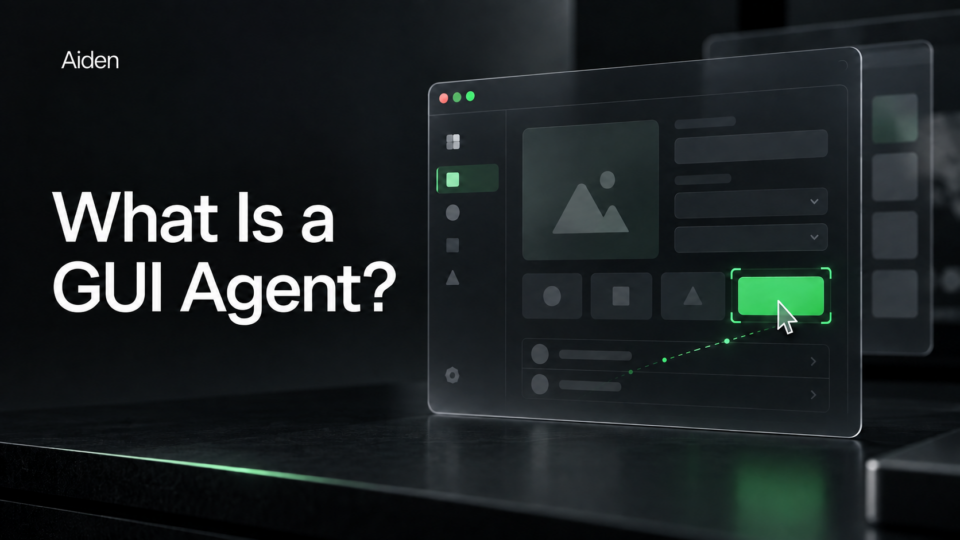
What Is a GUI Agent? How AI Reads and Acts on Interfaces.
See how a GUI agent observes interfaces, grounds targets, executes actions, and verifies outcomes, with testing methods and stopping rules.
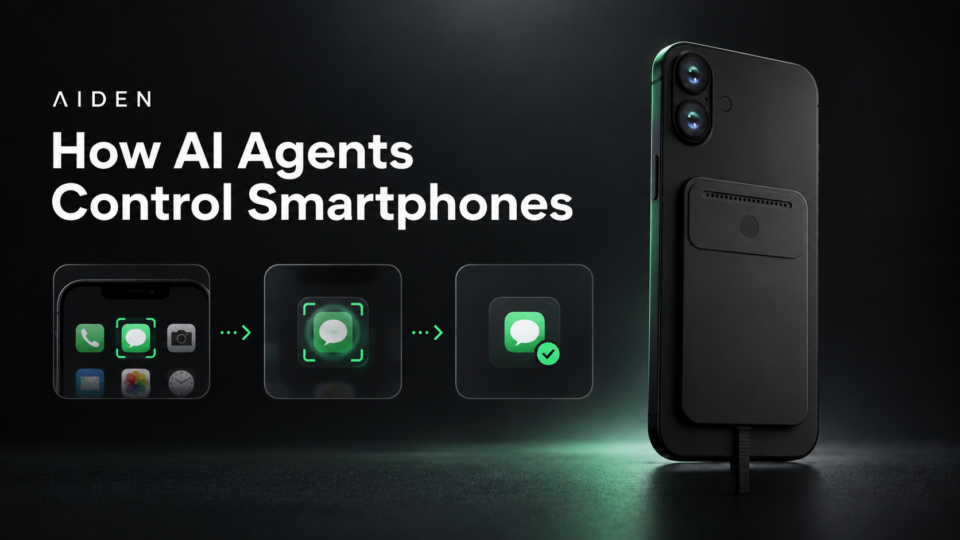
How AI Agents Control Smartphones
Learn how AI agents control smartphones using observe-act-verify loops, authorized inputs, and human oversight to verify task outcomes.