Aiden Expands Device Workflows Across Phones, Containers, and HDMI
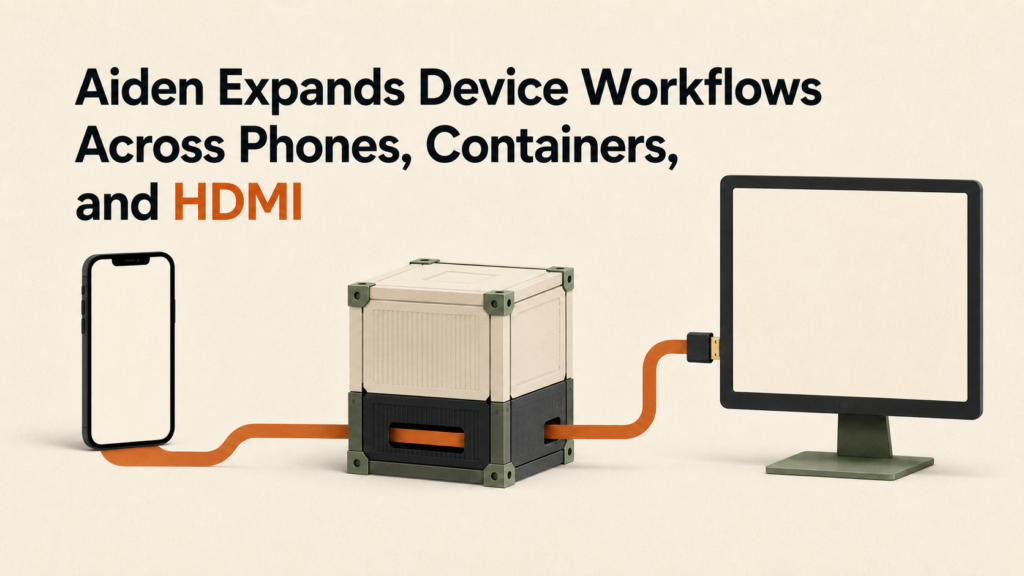
Major Update: Aiden device workflows now connect phone notifications and supported iOS background wake, a Docker Agent sandbox, and dual HDMI bridge support. Together, these changes give you clearer ways to work across a connected phone, a containerized service environment, and supported display-capture paths. The updates preserve important boundaries: wake signaling is separate from task traffic, the sandbox does not replace physical devices, and bridge support remains dependent on the compatible configuration in use.
Phone notifications enter a shared context
Aiden now joins iOS ANCS and Android Notification Access events in a shared notification context through PR #486, PR #499, and PR #501. This creates a common context for notification events coming from supported mobile platforms, so your connected environment can handle those events through a more consistent model.
For supported iOS calendar, contact, and local-notification tasks, the update adds authenticated iOS background wake while the phone remains connected over USB ECM. The design is deliberately narrow. Bluetooth Low Energy carries only a non-sensitive wake hint, not commands, results, or task data. It does not turn BLE into a phone-control or task-transport channel.
Commands and results continue to travel through the USB ECM queue. That distinction helps you evaluate behavior accurately: the wake hint can signal timely awareness of a supported iOS event, while the established wired queue remains responsible for the task communication path. A notification status such as delivered=true should not be read as confirmation that a related tool action has completed.
Android notification events participate in the shared notification context, but this update does not add the equivalent wake capability on Android. The merged work expands supported event awareness while keeping the iOS wake path and the Android notification path distinct.
The service layer can start in Docker
The Docker Agent sandbox introduced in PR #523 adds a Docker Compose environment that starts Config Web and Agent Web without requiring a development board. Configuration and runtime state persist across sandbox use, allowing your service-layer environment to retain its relevant working state.
You can connect MobileGym, ADB, or compatible environment bridges to the sandbox. That makes it practical to separate service development and integration work from setups that depend on a board. It also gives you a repeatable place to inspect web services and bridge connections before moving to a physical configuration.
The Docker Agent sandbox is a development environment, not a replacement for a virtual machine or a complete hardware emulator. It does not reproduce every board-dependent function, and hardware-only capabilities still require a board or compatible bridge. That separation is intentional: you can run the service layer in containers while continuing to use the appropriate connected environment when your workflow depends on physical capture or control capabilities.
This approach gives you a more focused boundary for Aiden device workflows. You can keep Config Web, Agent Web, persisted state, and supported bridge connections together in Docker, then introduce a board or compatible bridge only where the workflow genuinely needs one.
Screenshots follow a common provider path
Aiden’s HDMI bridge support now covers RK628D and TC358743 through PR #506, PR #507, and PR #519. Rather than treating both bridge families as interchangeable, the system selects the matching active bridge path for the supported configuration in use.
The update also sends screenshots from Device, MobileGym, ADB, and VPhone through a common provider path. This shared routing helps align screenshot handling across those environments while retaining the correct active path for the selected bridge.
In the reviewed Luckfox scenario, RK628D reached 1080p60. That result is specific to the reviewed setup, not a universal performance commitment across device combinations. Support for RK628D and TC358743 also does not extend to arbitrary HDMI adapters, imply identical validation for both bridge families, or automatically recognize a target platform.
These merged changes extend Aiden across connected phone context, containerized services, and supported display-capture configurations while keeping the technical boundaries clear. Follow Aiden’s project progress for future implementation updates.
Related posts
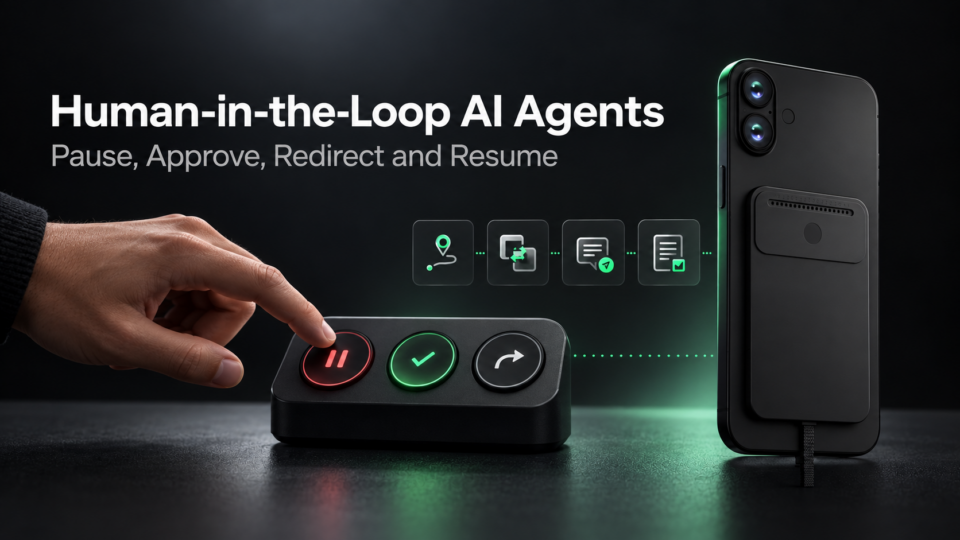
Human-in-the-Loop AI Agents: Pause, Approve, Redirect and Resume
Interruptible AI agent design uses preemption, task cancellation, and context control to keep physical AI actions redirectable.
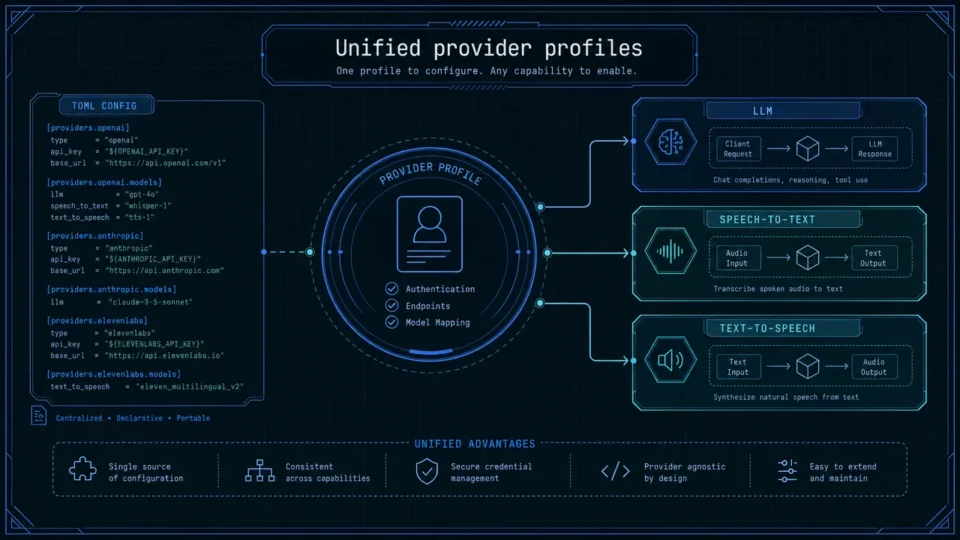
One-Click Provider Switching in Aiden Firmware
AI model provider management in Aiden centralizes LLM, STT, and TTS profiles to streamline testing across cloud and local services.
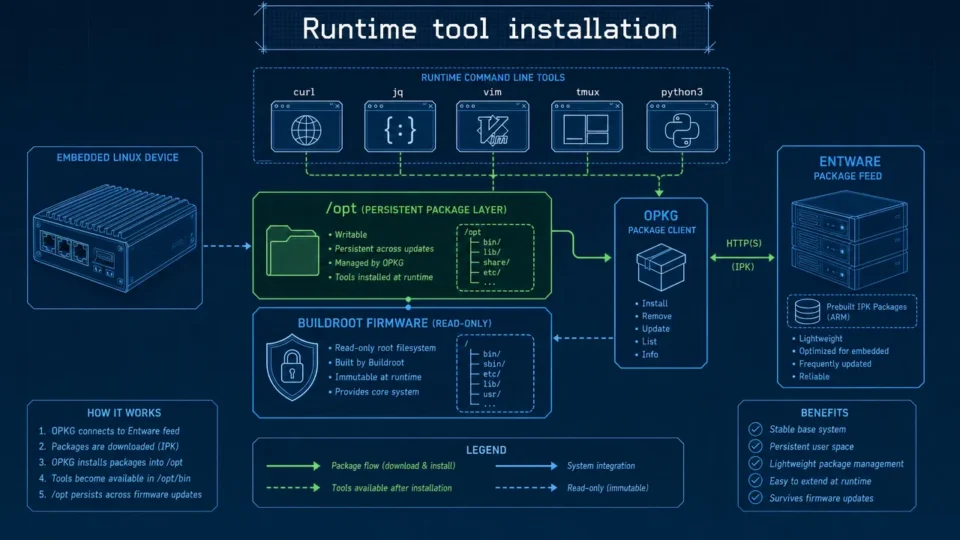
Embedded Package Management Without Rebuilding Firmware
Embedded package management in Aiden Firmware uses OPKG and Entware to install approved tools at runtime while keeping Buildroot stable.