Aiden Adds Responses API Context Recovery and Anthropic Stream Support
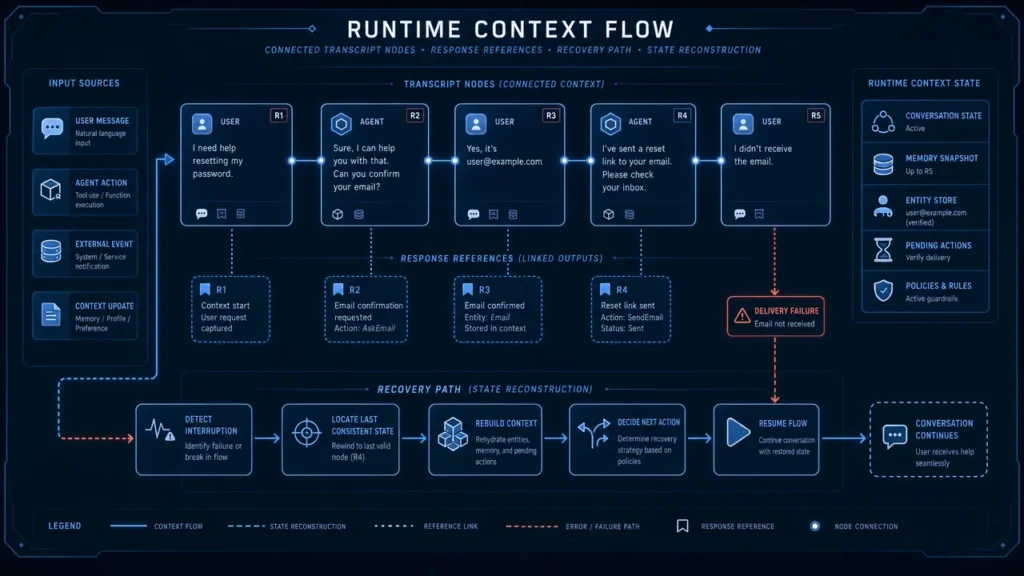
Major Update: Aiden firmware now adds Responses API mode, configurable context-management and truncation controls, local transcript recovery for expired response references, and Anthropic stream recovery behavior, giving you more control over how an agent task retains or rebuilds state across API interactions.
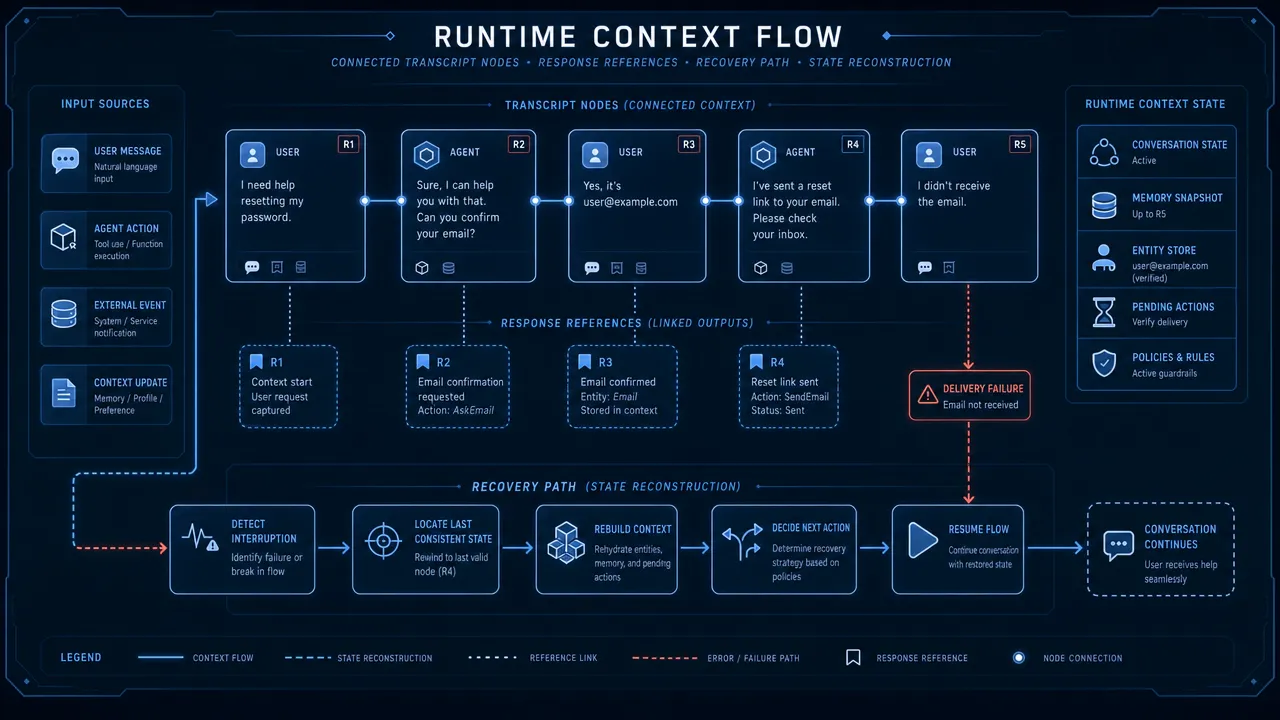
How AI agent context recovery keeps task state coherent
Aiden merged PR #542, PR #544, and PR #568 to advance continuity handling in the firmware and on-device agent runtime.
The update introduces a Responses API mode for cases where that interface fits the endpoint your task needs to call. This is an interface-selection capability, not a claim of universal compatibility. When the Responses API path matches your endpoint, you can select it rather than forcing the runtime through a different request pattern.
The same work makes context-management and truncation settings explicit controls. For developers building multi-step agent loops, conversation state is not merely a side effect of prior requests. It is part of the task state that must be carried forward deliberately. The new controls let you determine how Aiden handles that material as the task continues.
This is the practical value of AI agent context recovery in Aiden: you can select the relevant interface, define how context is managed, and retain a clearer path for continuing a task when its earlier response reference is no longer usable.
AI agent context recovery preserves the details a task needs
Aiden now preserves complete output items and the assistant phase. Both details matter when a runtime is operating across more than one request-response exchange.
Complete output-item preservation retains full units produced during execution instead of reducing the stored state to a partial representation. Assistant-phase preservation retains the runtime’s position in the interaction sequence. Together, these changes help Aiden maintain a coherent account of what has happened and where the task should resume.
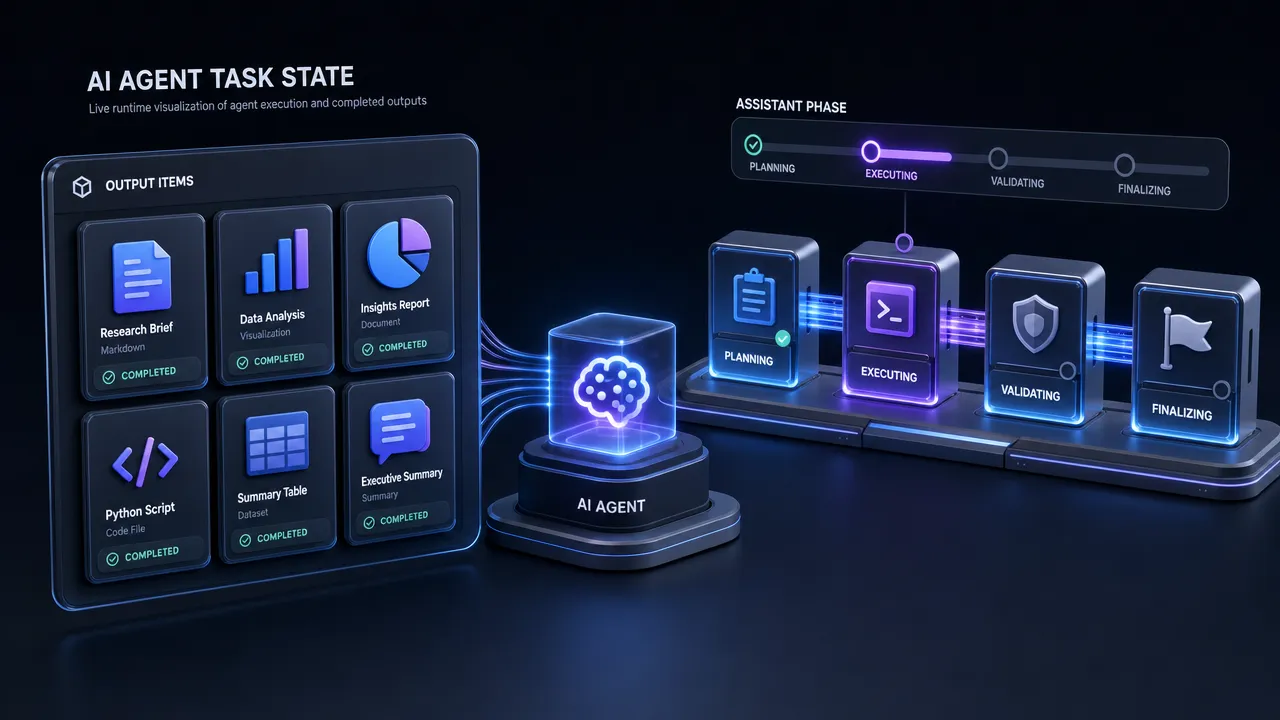
The effect is especially important when subsequent work depends on more than a final text response. Agent tasks may need to account for the output items that were generated along the way and the assistant phase in which they occurred. Preserving those pieces does not promise that every task can be reconstructed in every condition, but it provides the runtime with a more complete local state record for follow-on processing.
For Aiden, which uses a Go-based agent runtime to evaluate configured multimodal model output and direct device actions through USB HID, coherent state handling is part of keeping a task’s execution path understandable. This firmware progress focuses on the runtime layer that carries conversational material between those API interactions.
AI agent context recovery handles expired response references
Aiden also addresses a specific state-continuity boundary: an expired previous_response_id. When that reference can no longer be used, a task can rebuild the needed conversation context from its local transcript.
That reduces a concrete source of friction for developers. A task no longer has to treat a previous response reference as the only record available for continuing a conversation. Instead, the local transcript can supply the relevant material needed to restore context for the defined expiration case.
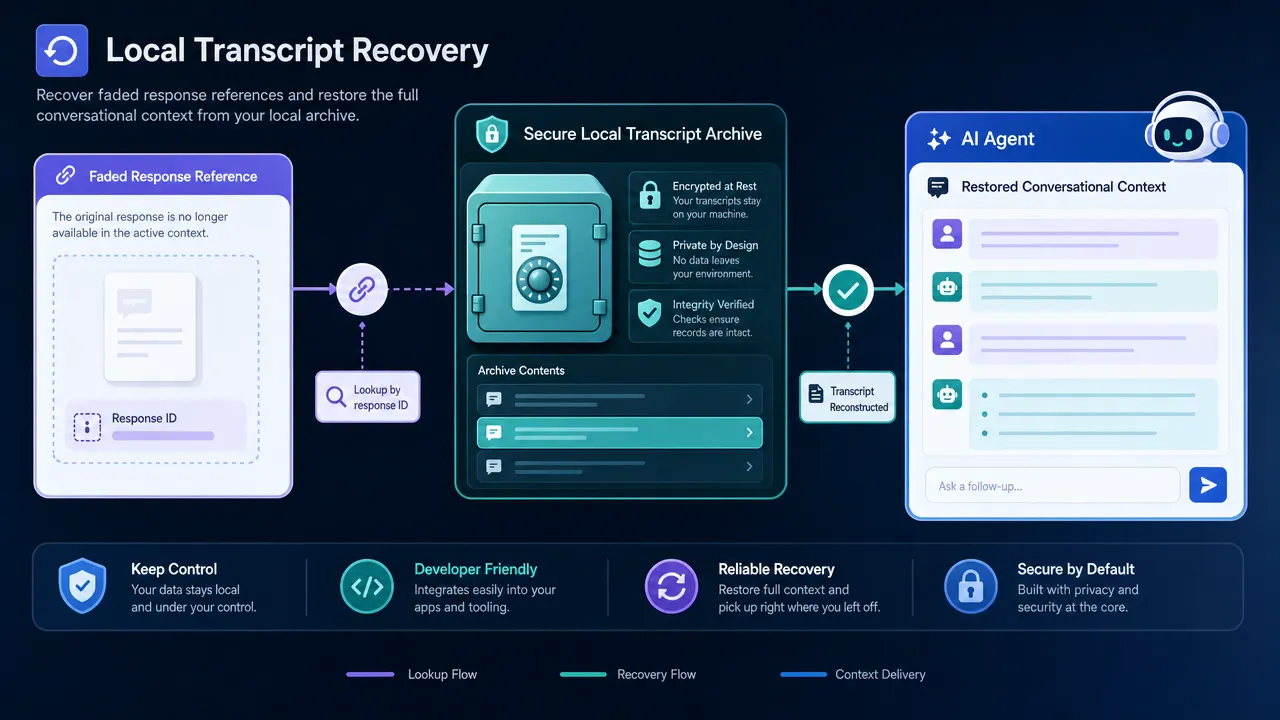
The change is intentionally narrow. It does not eliminate all failure modes, guarantee recovery in every circumstance, or remove network-related issues. It establishes a local context path when the prior response reference has expired, while complete output-item and assistant-phase preservation help the task state remain more coherent around that process.
AI agent context recovery also covers Anthropic streams
The merge includes stream recovery behavior for Aiden’s Anthropic execution path. For teams using an Anthropic streaming API endpoint, this means the firmware now includes recovery-oriented handling for streamed task state.
As with the response-reference work, the scope is precise. The update does not claim uninterrupted streaming or the removal of network failures. It adds stream recovery behavior within the implemented Aiden runtime path, alongside the context-management improvements introduced in the same firmware work.
Follow the Aiden firmware project. Join the Aiden community on Discord.
Related posts
Human-in-the-Loop AI Agents: Pause, Approve, Redirect and Resume
Interruptible AI agent design uses preemption, task cancellation, and context control to keep physical AI actions redirectable.
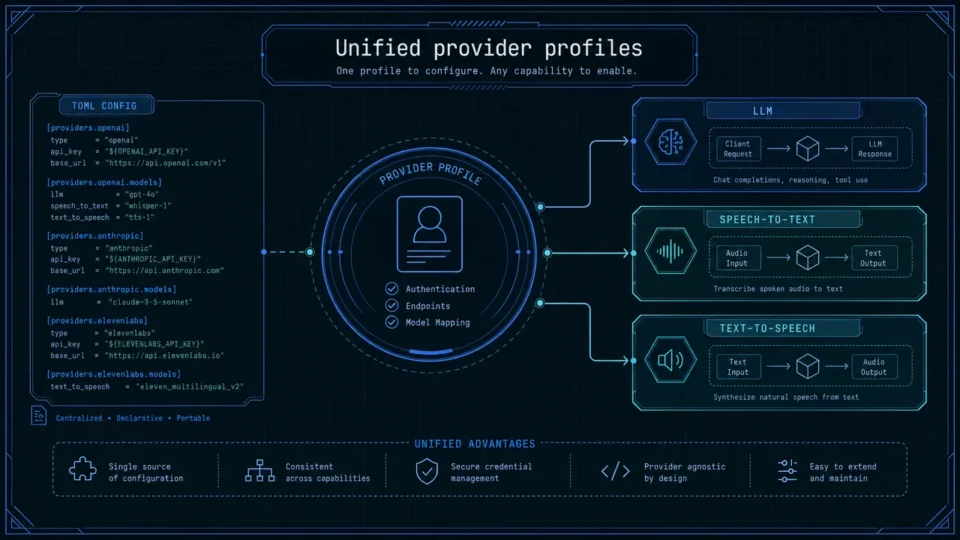
One-Click Provider Switching in Aiden Firmware
AI model provider management in Aiden centralizes LLM, STT, and TTS profiles to streamline testing across cloud and local services.
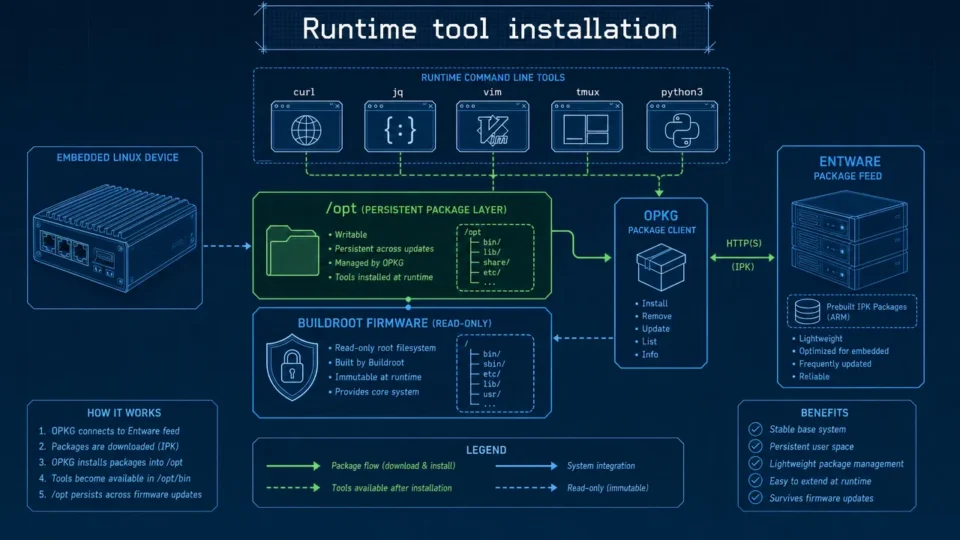
Embedded Package Management Without Rebuilding Firmware
Embedded package management in Aiden Firmware uses OPKG and Entware to install approved tools at runtime while keeping Buildroot stable.