Ai agent hardware, AI Agent Briefing — 2026-05-28

Summary

  • Goldman Sachs report reveals AI agents could dramatically increase token demand by 24x, impacting major tech companies’ operational costs
  • Animoca Brands invests $1 million in Superior.Trade to develop AI-powered trading agents on the Minds platform
  • Oracle and Classiq collaborate to integrate quantum AI agents with Oracle Cloud Infrastructure for advanced portfolio optimization
  • Alibaba pivots AI chip design strategy to focus on agent-specific architectures, reshaping the competitive landscape
  • Security researchers warn about potential vulnerabilities in AI agents, particularly for cryptocurrency applications
  • MIT Media Lab showcases AI Studio platform for developing AI agents and agentic web applications

AI Token Costs Surge as Agent Adoption Accelerates

Goldman Sachs has released a report warning that AI agents may increase token demand by 24 times, creating significant cost pressures for companies like Uber and Microsoft. The surge in tokenized billing is beginning to impact operational budgets as businesses scale their AI implementations.
Read Full Article: Tom’s Hardware

Animoca Brands Backs AI Trading Agents Platform

Animoca Brands has announced a $1 million investment in Superior.Trade to develop AI trading agents through the Minds platform. This strategic investment aims to advance automated trading capabilities and expand the ecosystem of AI-powered financial services.
Read Full Article: Crypto Briefing

Oracle and Classiq Launch Quantum AI Agent Integration

Oracle and Classiq have successfully integrated Quantum AI Agents with Oracle Cloud Infrastructure to perform 36-qubit portfolio optimization simulations. This collaboration represents a significant advancement in combining quantum computing with AI agent technology for complex financial calculations.
Read Full Article: Quantum Computing Report

Alibaba Reshapes AI Chip Strategy Around Agents

Alibaba is revolutionizing its approach to AI chip design by focusing specifically on agent architectures, fundamentally changing the competitive dynamics of the AI hardware race. This strategic pivot could influence how other chipmakers approach AI-specific silicon development in the coming years.
Read Full Article: AI News

Security Experts Warn of AI Agent Vulnerabilities

Researchers are urging the industry to treat AI agents as untrusted systems, highlighting significant security risks particularly in cryptocurrency applications. The warning emphasizes the need for robust security frameworks as AI agents increasingly handle sensitive financial operations and transactions.
Read Full Article: Crypto Briefing

MIT Media Lab Demonstrates AI Agent Development Platform

MIT Media Lab hosted a Demo Day featuring AI Studio for AI Agents and the agentic web, showcasing new tools and frameworks for agent development. The platform aims to simplify the creation and deployment of AI agents across various web applications and services.
Read Full Article: MIT Media Lab

LangGraph vs AutoGen: Which AI Agent Framework Handles Complex Workflows in 2026?

Most teams comparing LangGraph vs AutoGen in 2026 are asking the wrong question. They want to know which framework is better. The more useful question is which one matches how their system actually fails.

LangGraph vs AutoGen in 2026: LangGraph is the stronger default for complex, stateful, production-oriented workflows that need checkpoints, deterministic routing, and human approval gates. AutoGen is the better fit for conversational multi-agent collaboration, research prototypes, and agent teams that debate, delegate, and revise through messages.

For teams comparing LangGraph vs AutoGen, the real decision is not which framework is more popular. It is whether the system needs graph-based control, durable state, checkpoints, and human approval gates, or whether it needs flexible agents that talk, delegate, revise, and collaborate through messages. That distinction matters for AI agent framework comparison work, especially when the goal is reliable LLM workflow automation rather than a demo.

LangGraph vs AutoGen framework comparison

Why LangGraph vs AutoGen usually comes down to control, state, and collaboration

The simplest answer is this: choose LangGraph when complex workflows need deterministic agent orchestration, persistent state, resumability, and human review; choose AutoGen when multi-agent workflows depend on dynamic conversation, critique, delegation, and collaboration.

LangGraph is built around graphs. Developers define nodes, edges, conditional routes, and shared state. That structure makes it easier to reason about what happens next, why it happens, and how the workflow can recover after interruption. For a stateful agent framework, those qualities are central.

AutoGen is built around agents, messages, teams, and event-driven interaction. Microsoft describes AutoGen as a framework for creating multi-agent AI applications that can act autonomously or work with humans. Its current architecture includes AutoGen Core, AgentChat, Extensions, and Studio, as described in the official AutoGen documentation.

Here is the practical distinction:

Decision factor LangGraph is usually stronger when… AutoGen is usually stronger when…
Workflow shape The process has defined steps, branches, loops, and checkpoints The process depends on agents discussing, reviewing, and adapting
State State must be explicit, inspectable, and resumable Conversation history and team state are enough for the use case
Human review The system needs approval gates or state edits before continuing A human participates naturally in the conversation
Multi-agent workflows Agents need controlled routing and auditability Agents need flexible collaboration
Production fit Reliability, recovery, and orchestration control are primary Prototyping, research, and collaborative agent behavior are primary
Learning curve The team can invest in graph and state modeling The team wants to start quickly with conversational agents

For 2026 planning, that makes LangGraph the more conservative choice for complex workflows where failures, approvals, and auditability are serious engineering concerns. AutoGen remains compelling when the complexity comes less from workflow control and more from agent-to-agent reasoning.

LangGraph vs AutoGen architecture: Graph orchestration compared with agent conversation

LangGraph and AutoGen solve overlapping problems, but they encourage different mental models.

LangGraph treats an agentic application like a graph. A node can be a model call, a tool call, a retrieval step, a validation step, a human review point, or another agent. Edges define where execution goes next. Conditional routing decides what happens based on the current state.

That model is powerful for agent orchestration because it makes the workflow visible. Engineers can define where memory is updated, where tools are called, where a human must approve output, and where execution should resume after failure.

AutoGen treats an agentic application like a team. In AgentChat, multiple agents can work together toward a goal. The AutoGen Teams tutorial describes teams as groups of agents that collaborate and maintain state during a task. Common patterns include round-robin discussion, selector-based routing, swarm-like behavior, and more specialized multi-agent coordination.

flowchart LR

This architectural difference affects nearly every other part of the AI agent framework comparison.

LangGraph is better when you want workflow topology to be explicit. That includes tasks such as support escalation, document review, compliance approval, controlled data processing, hardware/software coordination, and long-running LLM workflow automation.

AutoGen is better when you want agents to collaborate naturally. That includes research assistants, coding agents, brainstorming agents, reviewer agents, and exploratory analysis systems where the next step may emerge from conversation.

Graph orchestration and multi-agent conversation

The architecture does not mean LangGraph cannot support multi-agent workflows. It can model agents as nodes or subgraphs. It also does not mean AutoGen cannot support state. AutoGen teams can be stateful, and Microsoft Research describes newer AutoGen directions around event-driven, observable, and extensible systems. The difference is where each framework starts: LangGraph starts with controlled workflow state; AutoGen starts with agent collaboration.

LangGraph vs AutoGen for stateful agent framework requirements

State is where LangGraph has the clearest advantage for complex workflows.

Production AI systems often need to know more than the last chat message. They need to track current task status, intermediate decisions, external API results, tool outputs, validation results, user approvals, retries, and recovery points. That is why stateful agent framework design is becoming a major concern in 2026.

LangGraph is explicitly designed for long-running, stateful workflows. Its documented capabilities include persistence, checkpoints, durable execution, memory patterns, and human-in-the-loop support. In practical terms, that means a team can design workflows that pause, resume, inspect state, and recover from failure more predictably.

AutoGen also supports stateful behavior. Its team-based abstractions keep conversation history unless reset, and its architecture includes components for memory, tools, extensions, and runtime behavior. Microsoft Research also highlights observability and OpenTelemetry support for AutoGen’s newer direction. Still, AutoGen’s state model is more conversation-centered, while LangGraph’s state model is more workflow-centered.

A useful way to compare them is by asking what kind of state matters most.

Stateful requirement Better default Why it matters
Checkpointing workflow progress LangGraph Useful for long-running tasks and failure recovery
Inspecting and editing execution state LangGraph Important for approvals, debugging, and compliance
Maintaining agent conversation history AutoGen Natural fit for collaborative multi-agent workflows
Resuming after interruption LangGraph Durable execution is central to production workflow automation
Human guidance during collaboration AutoGen Human input can fit naturally into agent conversations
Human approval before continuing LangGraph Approval gates fit graph-based execution well

Qualitative production workflow fit

The chart above reflects LangGraph’s typical fit for controlled production workflows. It is qualitative, not a benchmark. No public evidence proves that one framework is universally faster, cheaper, or more accurate across all use cases.

For teams building AI agent hardware and software systems, state management becomes even more important. When agents coordinate APIs, services, devices, sensors, logs, and human approvals, the orchestration layer must be predictable. LangGraph’s explicit state graph can help define safety boundaries and execution paths. AutoGen can still be valuable when specialized agents need to plan, discuss, and evaluate options before action.

If you’re evaluating agent frameworks for your workflow, Aiden can help you map the right architecture — aidenai.io

LangGraph vs AutoGen for multi-agent workflows and LLM workflow automation

AutoGen is often the stronger starting point for conversational multi-agent workflows.

Its AgentChat layer gives developers high-level patterns for teams of agents. One agent can plan, another can critique, another can execute code or call tools, and another can summarize results. This maps naturally to research assistants, coding copilots, analysis teams, and reviewer workflows.

The AutoGen GitHub repository describes the framework as a way to create multi-agent AI applications that can operate autonomously or alongside humans. The AutoGen stack also includes Extensions for integrations and Studio for visual or low-code experimentation. Microsoft Research describes AutoGen as moving toward an asynchronous, event-driven, distributed, observable, and extensible architecture.

LangGraph supports multi-agent workflows differently. Instead of making conversation the central abstraction, it lets developers place agents inside a controlled graph. This works especially well when agent handoffs must follow business logic. For example, a research agent might gather information, a validation agent might check constraints, a policy step might determine whether human review is required, and a final agent might generate an output only after approval.

That makes LangGraph better for governed LLM workflow automation. AutoGen is better for flexible agent collaboration.

Multi-agent workflow decision matrix

The production question is more nuanced. AutoGen has production-relevant capabilities, but Microsoft’s own ecosystem direction adds a strategic caveat. Microsoft provides migration guidance from AutoGen to Microsoft Agent Framework, which teams should review before committing to a long-term AutoGen architecture.

That does not make AutoGen obsolete. It means engineering leaders should evaluate versioning, migration cost, API stability, and long-term platform direction. For a short-lived prototype, AutoGen can be an excellent choice. For a multi-year enterprise system, the migration path matters.

Here is a practical use-case guide:

Use case Recommended default Reason
Enterprise approval workflow LangGraph Checkpoints, review gates, and resumability are central
Research assistant team AutoGen Agents can discuss, critique, and revise naturally
Coding agent prototype AutoGen Multi-agent coding and review patterns fit conversation well
Governed coding pipeline LangGraph Better for controlled stages, validation, and audit trails
Customer support automation Depends LangGraph for escalation control; AutoGen for conversational triage
Data analysis workflow Depends LangGraph for repeatable pipelines; AutoGen for exploratory analysis
Hardware/software orchestration LangGraph Explicit state and deterministic routing are safer defaults
Brainstorming or planning agents AutoGen Dynamic collaboration is the main value

A common hybrid pattern is conceptually possible: use LangGraph as the outer workflow controller and place an AutoGen-style conversational team inside one step. However, treat this as an architectural option, not a documented best practice, unless your engineering team validates it directly.

LangGraph vs AutoGen production checklist for 2026 decisions

The best 2026 framework choice starts with operational requirements, not feature lists. Teams should define how the agent system behaves when the model is wrong, a tool fails, a user changes requirements, an approval is denied, or execution must resume later.

Use this checklist before choosing LangGraph vs AutoGen:

Question If yes, lean toward
Does the workflow need durable checkpoints? LangGraph
Must humans approve or edit state before execution continues? LangGraph
Does the workflow need deterministic routing? LangGraph
Is auditability a major requirement? LangGraph
Is the main value agent-to-agent collaboration? AutoGen
Do agents need to debate, critique, or delegate dynamically? AutoGen
Is the project primarily a prototype or research system? AutoGen
Is the organization deeply aligned with Microsoft’s agent ecosystem? AutoGen or Microsoft Agent Framework evaluation
Does the system coordinate tools, APIs, services, or devices with safety constraints? LangGraph
Is long-term framework direction a major risk factor? Evaluate both carefully

flowchart TD

Observability should also influence the decision. LangGraph is commonly paired with the broader LangChain ecosystem’s tracing and evaluation tooling, while AutoGen’s newer materials discuss tracking, tracing, debugging, and OpenTelemetry support. For production systems, observability is not optional. Teams need traces, logs, test cases, evaluation datasets, and clear failure recovery procedures.

The most practical recommendation is to prototype both frameworks against the same representative workflow. Do not compare a LangGraph toy graph with an AutoGen polished demo, or an AutoGen chat prototype with a production-grade LangGraph pipeline. Use the same task, same tools, same models, same success criteria, and same failure scenarios.

Measure:

  • How clearly the workflow can be represented.
  • How easily state can be inspected.
  • How reliably failures can be recovered.
  • How much code is required for guardrails.
  • How easy it is to add human review.
  • How understandable traces and logs are.
  • How confident the team feels maintaining the system six months later.

The 2026 Decision
LangGraph and AutoGen are not competing for the same job. LangGraph is infrastructure for workflows that need to be reliable, inspectable, and resumable. AutoGen is infrastructure for agent teams that need to think, discuss, and adapt.
The clearest signal for LangGraph: your workflow has defined stages, requires human approval at specific points, and must recover predictably from failure. The clearest signal for AutoGen: your workflow’s value comes from agents reasoning together, and flexibility matters more than determinism.
For most production systems in 2026, LangGraph is the safer default. For most research and prototyping work, AutoGen gets you further faster.
If you are building an agent system and need help mapping the right architecture to your workflow — whether that is LangGraph, AutoGen, CrewAI, or a hybrid — Aiden works with teams on agent infrastructure design and deployment. Start at aidenai.io.

LangGraph vs AutoGen FAQs

Is LangGraph better than AutoGen?

LangGraph is generally better for stateful, deterministic, production-oriented workflows that need checkpoints, human review, and resumability. AutoGen is generally better for conversational multi-agent collaboration, research prototypes, and agent teams that discuss or delegate tasks.

Is AutoGen good for production?

AutoGen has production-relevant capabilities, including event-driven architecture, extensions, tracing concepts, OpenTelemetry support, Studio, and stateful teams. However, teams should review Microsoft’s AutoGen-to-Microsoft-Agent-Framework migration guidance before starting a long-term production project.

Which framework is better for complex workflows?

LangGraph is usually better for complex workflows when complexity comes from state, routing, approvals, retries, and auditability. AutoGen is better when complexity comes from multiple agents collaborating through conversation.

Which framework is better for multi-agent workflows?

AutoGen is often easier for multi-agent workflows because agent teams are a first-class abstraction. LangGraph is still strong for multi-agent systems when each agent must operate inside a controlled graph with explicit routing and state.

Which is the better stateful agent framework?

LangGraph is the stronger default stateful agent framework because persistence, checkpoints, and durable execution are core parts of its design. AutoGen supports stateful teams and conversation history, but its model is more collaboration-oriented.

Can LangGraph and AutoGen be used together?

Yes, it is technically possible for engineering teams to combine Python-accessible frameworks in a larger architecture. A practical concept would be using LangGraph as the outer controller and an AutoGen-style team for a specialized conversational step. Treat that as a custom architecture requiring validation, not an official default pattern.

What is the final recommendation for 2026?

Choose LangGraph for controlled agent orchestration, complex workflows, stateful execution, approvals, and production LLM workflow automation. Choose AutoGen for conversational multi-agent workflows, research assistants, coding agents, and rapid collaborative prototypes. For high-stakes systems, prototype both and decide based on state, recovery, observability, and maintainability.

AI Agent Briefing — 2026-05-27

Summary

  • AI coding agents introduce production risks through "vibe coding" practices that compromise deployment safety
  • OpenSea launches ERC-8257 standard enabling NFT-based API access for AI agents
  • New strategies emerge to balance rapid AI innovation with reducing security debt
  • High costs of unmonitored AI agents drive demand for live telemetry solutions like Claude Code
  • DuckDuckGo sees 30% install surge as users reject Google’s AI-powered search features
  • Critical engineering infrastructure gaps hinder production-ready AI agent deployment
  • Base introduces crypto wallet connectivity tools for AI agent integration
  • JPMorgan research reveals AI agent deployment accelerating despite stagnant broader AI adoption

AI Coding Agents Create Production Deployment Risks

The emergence of AI coding agents has introduced a concerning trend called "vibe coding" that poses significant risks to production environments. This practice, where developers rely heavily on AI-generated code without thorough review, threatens deployment stability and security. Organizations are scrambling to implement better oversight and testing protocols to mitigate these emerging risks.

Read Full Article: HackerNoon

OpenSea Revolutionizes AI Agent Economics with ERC-8257

OpenSea has unveiled ERC-8257, an innovative standard that transforms how AI agents access tools and services. The platform creates a marketplace where purchasing NFTs unlocks specific APIs for AI agents, establishing a new economic model for agent capabilities. This approach could fundamentally change how developers monetize and distribute AI agent tools.

Read Full Article: 深潮TechFlow

Balancing Innovation Speed with AI Security Debt

Organizations face mounting pressure to innovate rapidly with AI while managing accumulating security debt. New frameworks propose practical paths to maintain innovation velocity while systematically reducing security vulnerabilities. The approach emphasizes continuous security integration rather than post-deployment patches, enabling sustainable AI development practices.

Read Full Article: cio.com

High Operational Costs Drive AI Agent Monitoring Solutions

The expensive nature of running AI agents unmonitored has sparked demand for sophisticated telemetry systems. Claude Code exemplifies this trend with live monitoring and analysis capabilities that help organizations control costs while maintaining performance. These tools provide real-time insights into agent behavior, resource consumption, and output quality.

Read Full Article: HackerNoon

Privacy-Focused Search Surges as Users Resist AI Integration

DuckDuckGo installations have jumped 30% as users actively reject Google’s AI-powered search features. This significant shift reflects growing user frustration with forced AI integration in search experiences. The trend signals a potential market fragmentation between AI-enhanced and traditional search preferences.

Read Full Article: TechCrunch

Critical Infrastructure Gaps Hinder Production AI Agents

The current engineering stack for production AI agents remains incomplete, creating significant deployment challenges. Missing components include robust orchestration layers, standardized testing frameworks, and reliable failover mechanisms. These infrastructure gaps prevent many organizations from moving AI agents from experimental to production environments.

Read Full Article: HackerNoon

Base Bridges Crypto Wallets and AI Agents

Base has launched groundbreaking tools that enable seamless connection between cryptocurrency wallets and AI agents. This integration allows AI agents to execute blockchain transactions, manage digital assets, and interact with decentralized applications. The development opens new possibilities for autonomous financial operations and Web3 integration.

Read Full Article: TradingView

JPMorgan Reveals AI Agent Boom Amid Broader Stagnation

JPMorgan’s latest analysis uncovers a striking divergence in AI adoption patterns, with agent deployment surging while general AI implementation plateaus. The research indicates organizations are prioritizing specialized AI agents over broad AI initiatives. This trend suggests a maturation in AI strategy, focusing on specific high-value use cases rather than blanket adoption.

Read Full Article: Crypto Briefing

Why CrewAI beats LangChain for multi-agent work

CrewAI beats LangChain for multi-agent work when the workflow is role-based, task-oriented, and easier to describe as a team of specialists than as a state machine. The stronger opinion is not that CrewAI is universally better. It is that CrewAI is often the better multi-agent framework when teams need to define agents, assign responsibilities, coordinate handoffs, and move from idea to prototype without designing a full graph runtime first.

That distinction matters because the modern CrewAI vs LangChain debate is really a three-part comparison: CrewAI for agent teams, LangChain for broad LLM application development, and LangGraph plus LangSmith for complex orchestration and production observability. A fair LangChain comparison must include that wider ecosystem. A fair CrewAI comparison must recognize why its narrower focus is exactly what makes it effective for many agent workflow comparison scenarios.

CrewAI vs LangChain quick verdict for multi-agent teams

CrewAI wins the quick verdict for multi-agent teams because its core abstractions match how people already think about collaborative work: roles, goals, tasks, tools, memory, delegation, crews, and process flow. LangChain is broader. It supports agents, tools, retrievers, prompts, chains, and many integrations, but its original center of gravity is the larger category of LLM application development rather than role-based agent teamwork.

In practice, CrewAI feels like designing a compact organization. LangChain with LangGraph feels like designing a programmable workflow engine. Both are valuable. The better choice depends on whether the work looks more like a team or a graph.

AI agent team command center

For a fast role-based prototype, CrewAI usually gives the cleaner path. A research agent gathers facts, an analyst interprets them, a writer drafts output, and a reviewer checks quality. That structure is natural in CrewAI. In LangGraph, the same system can be powerful, but it requires explicit state, nodes, edges, routing, and persistence decisions.

Decision point Better fit Why
Fast multi-agent prototype CrewAI Agents, tasks, and crews map directly to the intended workflow.
Role-based business process CrewAI The framework language mirrors human team structure.
Broad LLM orchestration framework LangChain It has a wider component and integration ecosystem.
Complex stateful execution LangGraph Graph state, checkpoints, branching, and durable execution are more explicit.
Production tracing and evaluation LangSmith The LangChain ecosystem has a dedicated observability layer.
AI hardware and software operations Hybrid CrewAI can coordinate roles, while graph-based control may be better for telemetry-driven state.

This is why "CrewAI vs LangChain" should not be reduced to a simple winner-takes-all claim. CrewAI is a sharper AI agent framework for role-based multi-agent work. LangChain and LangGraph are stronger when the application requires broad integrations, complex state, or enterprise-grade observability.

Qualitative Fit Scores for Agent Workflows

The chart is qualitative, not a benchmark. It reflects the pattern found across official documentation and reputable third-party analysis, including IBM’s discussion of agent framework trade-offs in its comparison of CrewAI, LangGraph, and BeeAI.

CrewAI vs LangChain architecture: Team model vs state graph

The architectural difference is the heart of the CrewAI vs LangChain comparison. CrewAI starts with people-like roles. LangChain starts with reusable LLM application components, and LangGraph adds stateful graph orchestration on top.

CrewAI’s model is simple to explain:

  1. Define agents with roles, goals, tools, and memory.
  2. Define tasks with expected outputs.
  3. Assign tasks to agents.
  4. Put agents into a crew.
  5. Run the crew through a process or flow.

LangGraph’s model is more explicit and more programmable:

  1. Define a shared state schema.
  2. Define nodes.
  3. Define edges.
  4. Add conditional routes.
  5. Add persistence or checkpointing.
  6. Compile and run the graph.
  7. Observe and evaluate behavior.

Neither model is inherently superior. The CrewAI model is better when clarity, delegation, and role boundaries matter more than low-level control. The LangGraph model is better when the workflow must pause, resume, retry, branch, loop, or preserve detailed state over time.

flowchart LR

CrewAI’s advantage is cognitive speed. A product manager, support lead, or operations team can often understand a CrewAI workflow just by reading the role names and task descriptions. That is harder with graph code unless the team is already comfortable thinking in state transitions.

LangChain’s advantage is architectural breadth. It is not only an AI agent framework. It also supports retrieval, document processing, tool calling, structured outputs, model abstraction, prompt orchestration, and other building blocks for LLM applications. Its documentation has long emphasized a large integration ecosystem, while independent explainers such as IBM’s overview of LangChain also frame it as a general framework for building LLM-powered applications.

Architecture layer CrewAI approach LangChain/LangGraph approach
Agent definition First-class role-based agents Agents can be modeled through components, nodes, and prompts.
Task coordination Tasks, crews, collaboration, delegation Nodes, edges, state, and routing logic
Workflow shape Sequential, hierarchical, or flow-based Graph-based, cyclic, conditional, and resumable
Context handling Memory, task outputs, crew context, knowledge Shared graph state, persistence, checkpoints
Developer burden Lower for agent-team workflows Higher upfront, but more control
Best mental model "A team completing work" "A state machine managing execution"

For many teams, that mental model difference decides the framework. A multi-agent workflow for content review, support triage, market research, or test reporting does not always need a graph runtime first. It needs reliable role separation, clear task ownership, and understandable handoffs.

Team model versus graph model

That is the main reason CrewAI often beats LangChain for multi-agent work: it reduces the amount of architecture a team must invent before the first useful agent workflow is running. LangGraph can absolutely model the same collaboration, but it asks the developer to make more structural decisions earlier.

CrewAI vs LangChain agent workflow comparison for real projects

A useful agent workflow comparison should start with the work pattern, not the brand name. CrewAI is strongest when the workflow resembles role-based collaboration. LangChain with LangGraph is strongest when the workflow resembles a controlled system with branching, loops, checkpoints, and long-running state.

Consider a research-to-report workflow. CrewAI can define a researcher, analyst, writer, and reviewer. Each agent has a role and a task. The crew produces a final report. The same workflow in LangGraph would define a shared state object, nodes for research and writing, a review route, and conditional loops when the reviewer rejects the draft.

CrewAI is not less capable just because it is simpler. Its simplicity is the product advantage for many workflows.

Use case CrewAI fit LangChain/LangGraph fit Recommended choice
Research automation High Medium CrewAI
Content pipeline automation High Medium CrewAI
Sales or support triage High High CrewAI for prototype, LangGraph for complex escalation
Enterprise RAG Medium High LangChain/LangGraph
Long-running approval workflow Medium High LangGraph
Hardware telemetry triage Medium High Hybrid
Documentation generation High Medium CrewAI
Production monitoring and evaluation Medium High LangSmith layer

The "team versus state machine" rule is especially helpful for AI hardware and software companies. A hardware/software operations workflow may include a telemetry triage agent, diagnostic reasoning agent, documentation agent, and QA reviewer. CrewAI is a natural fit for coordinating those roles. But if the workflow must respond to device state, retry failed actions, persist checkpoints, or wait for human approval, LangGraph-style orchestration may be safer.

Workflow Fit by Use Case

The point is not that one stack replaces the other. The point is that each framework rewards a different design instinct. CrewAI rewards clear specialization. LangGraph rewards explicit state control.

For a simple support workflow, CrewAI might define:

  • A triage agent that classifies the request.
  • A knowledge agent that retrieves relevant internal information.
  • A response agent that drafts the answer.
  • A review agent that checks quality and policy alignment.

For a more complex support workflow, LangGraph may become preferable because the process may need escalation loops, human approval, persistent case state, and conditional routing based on user sentiment, account tier, or risk level.

That is why the best multi-agent framework is often not the one with the most features. It is the one whose abstractions match the first version of the system you actually need to ship.

CrewAI vs LangChain production trade-offs: Integrations, state, and observability

CrewAI’s biggest advantage is role-based orchestration. LangChain’s biggest advantage is ecosystem breadth. LangGraph’s biggest advantage is stateful control. LangSmith’s biggest advantage is observability.

A serious CrewAI vs LangChain opinion must acknowledge where LangChain still wins. The LangChain ecosystem is broader for model providers, retrievers, vector stores, document loaders, tools, and non-agent LLM applications. For enterprise RAG, document intelligence, or existing data stack integration, LangChain often has the stronger starting point.

LangGraph also changes the comparison. Without LangGraph, CrewAI can look far more natural for multi-agent work. With LangGraph, the LangChain ecosystem becomes much stronger for durable agent systems that need persistence, branching, retries, interrupts, and graph state.

LangSmith matters for production because debugging agent systems is not optional. Multi-agent applications can fail in subtle ways: tool misuse, hallucinated assumptions, poor routing, excessive token usage, broken handoffs, or unbounded loops. LangSmith is designed around tracing, evaluation, monitoring, and observability. IBM’s overview of LangSmith describes the platform in that broader lifecycle context.

Production AI orchestration observability dashboard

CrewAI also has production-oriented concepts such as flows, memory, tools, guardrails, and observability positioning. The difference is that LangSmith is a more explicit and mature observability product in the LangChain ecosystem. For teams that need dashboards, evaluations, traces, cost visibility, latency tracking, and governance workflows, that advantage is meaningful.

Production requirement CrewAI LangChain/LangGraph/LangSmith
Fast role-based deployment Strong Moderate
Complex branching Moderate Strong
Persistent state Moderate Strong
Long-running workflows Moderate Strong
Enterprise integrations Moderate Strong
Observability and evaluation Improving Strong
Human approval checkpoints Possible through workflow design Strong with graph interrupts and persistence
Business readability Strong Moderate
Low-level control Moderate Strong

The key production question is not "Can CrewAI go to production?" A better question is "What kind of production behavior does the system need?" If the answer is a team-like workflow with clear tasks and limited branching, CrewAI is often enough and easier to maintain. If the answer is a long-running graph with retries, persistent state, and audit-heavy monitoring, LangGraph and LangSmith deserve serious consideration.

This is where some comparisons become misleading. Saying "CrewAI beats LangChain" is true only within a specific context. Saying "LangChain beats CrewAI" is also true in other contexts. The accurate opinion is sharper: CrewAI beats LangChain for many role-based multi-agent workflows because it is purpose-built for agent teams, while LangChain’s ecosystem wins when breadth, state, and observability dominate.

CrewAI vs LangChain decision framework for AI hardware and software teams

AI hardware and software teams should choose the framework based on workflow shape, production constraints, and the level of control required. For a company building agentic systems, the choice may also be hybrid: CrewAI for high-level agent collaboration and LangGraph or equivalent state orchestration for device-aware control flows.

Choose CrewAI when the system needs:

  • Clear agent roles.
  • Task ownership.
  • Delegation between specialized agents.
  • Sequential or hierarchical workflows.
  • Fast prototyping.
  • Business-readable architecture.
  • Agent teams for research, documentation, diagnostics, support, or operations.

Choose LangChain with LangGraph when the system needs:

  • Complex state transitions.
  • Conditional branching.
  • Loops and retries.
  • Durable execution.
  • Persistent checkpoints.
  • Human approval at arbitrary points.
  • Advanced RAG.
  • Broad model, vector store, and data integrations.
  • Production tracing and evaluation through LangSmith.

Consider a hybrid approach when high-level work is role-based but low-level execution is stateful. For example, a diagnostic crew might include an intake agent, telemetry analyst, troubleshooting agent, and report writer. CrewAI can coordinate those responsibilities. A graph runtime can manage device state, retry rules, approval checkpoints, and persistent execution.

Question If yes, lean toward
Can the workflow be described as roles completing tasks? CrewAI
Does the workflow require complex graph routing? LangGraph
Do stakeholders need to understand the system quickly? CrewAI
Does the system need 1000-plus style integration breadth? LangChain ecosystem
Is observability a central requirement from day one? LangSmith
Does the workflow combine human-like collaboration with stateful control? Hybrid

A practical decision tree looks like this:

flowchart TD

For aidenai.io’s audience, the most useful takeaway is pragmatic: agent orchestration should serve the operating model of the product, not the other way around. AI hardware and software workflows often combine human-readable roles with machine-level state. That combination is why CrewAI vs LangChain should be treated as an architecture decision, not a popularity contest.

CrewAI is the better starting point when the job is to build a team of agents that can collaborate on bounded tasks. LangChain, especially with LangGraph and LangSmith, is the better stack when the job is to build a deeply integrated, stateful, observable LLM system. The strongest engineering teams will not ask which brand wins every scenario. They will ask which abstraction reduces risk for the workflow in front of them.

The final verdict is clear: CrewAI beats LangChain for many multi-agent workflows because its agents, tasks, crews, and collaboration model make role-based orchestration faster and easier to reason about. LangChain still wins as the broader LLM orchestration framework, and LangGraph still wins when the workflow needs state-machine precision. For AI agent hardware and software teams, the smartest path may be CrewAI for agent teamwork, LangGraph for stateful execution, and strong observability wherever production risk demands it.

How do you compare AI agent frameworks in 2026?

The best way to compare AI agent frameworks in 2026 is to rank them by production control, model flexibility, observability, governance, RAG capability, and deployment fit rather than by popularity alone. A framework that is perfect for a fast prototype can be risky for a regulated workflow, while a production-grade graph runtime may be unnecessary for a simple research assistant.

AI Agent Framework Decision Stack

For aidenai.io, this matters because AI agent hardware and software are converging. Teams are no longer choosing only a Python library. They are choosing the runtime pattern that will determine latency, cost, traceability, permissions, human oversight, and whether agents can eventually run across cloud, on-prem, edge, or device-integrated environments.

How the best AI agent frameworks 2026 should be evaluated

The best AI agent frameworks 2026 should be evaluated with a practical scoring model: what the agent must do, how much control the team needs, and where the workload will run. A useful AI agent framework comparison starts with architecture, not hype.

An AI agent framework is an orchestration layer that helps models plan steps, call tools, retrieve data, maintain state, coordinate with other agents, request human approval, and log what happened. In 2026, that means the framework must support more than a chat loop. It must help teams manage failure, cost, permissions, evaluation, and deployment.

Use these criteria before selecting a stack:

Criterion What to check Why it matters
Production readiness State, retries, checkpoints, error recovery Agents fail in long-running workflows unless control is explicit
Model flexibility Support for multiple LLM providers and local models Reduces lock-in and enables cost routing
RAG support Retrieval, document connectors, grounding, citation patterns Enterprise agents often need private knowledge
Observability Traces, tool logs, token usage, evaluation hooks Debugging agents without traces is expensive
Multi-agent support Role-based teams, handoffs, graph patterns Useful for research, coding, support, and operations
Security and governance Permissions, human approval, audit logs Required for regulated or high-impact workflows
Deployment fit Cloud, on-prem, edge, hardware-aware execution Latency, privacy, and cost depend on runtime location

A practical shortlist starts with LangGraph documentation for stateful orchestration, CrewAI documentation for role-based multi-agent prototyping, Semantic Kernel documentation for Microsoft-aligned enterprise applications, LlamaIndex documentation and Haystack documentation for agentic RAG, and PydanticAI documentation for type-safe Python agents.

AI Agent Framework Selection Scores - Analyst Assessment

Best AI agent frameworks 2026 comparison by use case

The best AI agent frameworks 2026 list changes by workload. LangGraph is often the strongest default for complex production systems because it models agents as state graphs with explicit nodes, edges, memory, checkpoints, and human-in-the-loop paths. It is not always the easiest framework, but it gives engineering teams a clearer way to control branching workflows.

CrewAI is different. It is strongest when the workflow feels like a team: researcher, analyst, writer, reviewer, sales assistant, or operations coordinator. For many startups and product teams, CrewAI vs LangChain comes down to speed versus control. CrewAI is faster to explain and prototype. LangChain and LangGraph offer deeper orchestration and richer production patterns through the broader LangChain docs.

CrewAI vs LangGraph Workflow

Semantic Kernel is a strong option for enterprise teams already aligned with Microsoft, Azure, C#, Java, or Python service architectures. AutoGen remains relevant for multi-agent conversation research and prototypes, but teams should verify current roadmap and support before choosing it as a greenfield production foundation. LlamaIndex and Haystack are better when the central problem is not autonomy but grounded retrieval over documents, databases, and enterprise knowledge.

Use case Strong candidates Recommendation
Production-grade stateful agents LangGraph, Semantic Kernel Prioritize checkpoints, state, auditability, and recovery
Fast multi-agent prototypes CrewAI, AutoGen Use for role-based workflows and early validation
Agentic RAG LlamaIndex, Haystack, LangGraph Start with retrieval quality and grounding
Type-safe Python apps PydanticAI Favor structured outputs and validation
Prompt and program optimization DSPy Use as an optimization layer, not a full runtime
Hardware-integrated AI agents LangGraph, Semantic Kernel, custom runtimes Optimize for latency, permissions, and deployment location

For open source AI agent frameworks, LangChain/LangGraph, CrewAI, AutoGen, Semantic Kernel, LlamaIndex, Haystack, PydanticAI, DSPy, MetaGPT, AutoGPT, TaskWeaver, and SuperAGI all deserve consideration. The best autonomous AI agents, however, are rarely the most unconstrained. The safest production agents are usually bounded by permissions, approvals, logs, and deterministic workflow paths.

Best AI agent frameworks 2026 for CrewAI vs LangChain decisions

The best AI agent frameworks 2026 discussion often narrows to CrewAI vs LangChain, but the more precise comparison is CrewAI vs LangGraph. CrewAI asks, "Which AI roles should collaborate on this task?" LangGraph asks, "Which state machine should control this workflow?"

Choose CrewAI when the workflow is easy to describe as a team process. Research briefs, content pipelines, sales preparation, market analysis, and operational summaries fit this model well. The abstractions are readable, and the learning curve is lower.

Choose LangGraph when reliability matters more than speed. Long-running workflows, approval steps, retries, branching, tool failures, and audit requirements are easier to reason about when the agent is represented as an explicit graph. LangGraph is especially useful when human review must be inserted before an agent sends an email, changes a record, runs code, or triggers an external system.

flowchart TD

For regulated, customer-facing, or infrastructure-sensitive agents, the framework should support human-in-the-loop controls, scoped tool permissions, trace storage, and repeatable evaluations. The NIST AI Risk Management Framework is a useful reference for risk thinking, while the EU AI Act implementation timeline shows why documentation, oversight, and traceability are becoming architectural requirements.

Best AI agent frameworks 2026 and the model ecosystem

The best AI agent frameworks 2026 cannot be separated from model strategy. The best LLM for coding 2026 depends on the task: repo-level refactoring, secure code review, test generation, UI work, data analysis, or long-context debugging. A model that performs well on one coding benchmark may not be best for latency-sensitive tool use or private on-device execution.

Claude 3.5 vs GPT-4o remains a useful historical comparison because it captures two earlier strengths: coding and reasoning on one side, multimodal speed and assistant UX on the other. But 2026 architecture should not be based only on that older comparison. Teams should run current evaluations against their own repositories, tools, documents, and risk constraints.

Latest AI model releases, OpenAI news 2026, Google AI news 2026, and AI news today 2026 all influence framework decisions, but production teams should avoid rebuilding architecture every time a model leaderboard changes. Model routing is the more durable pattern: use stronger frontier models for hard reasoning, cheaper models for routine extraction, local models for privacy-sensitive tasks, and specialized coding models for high-volume development work.

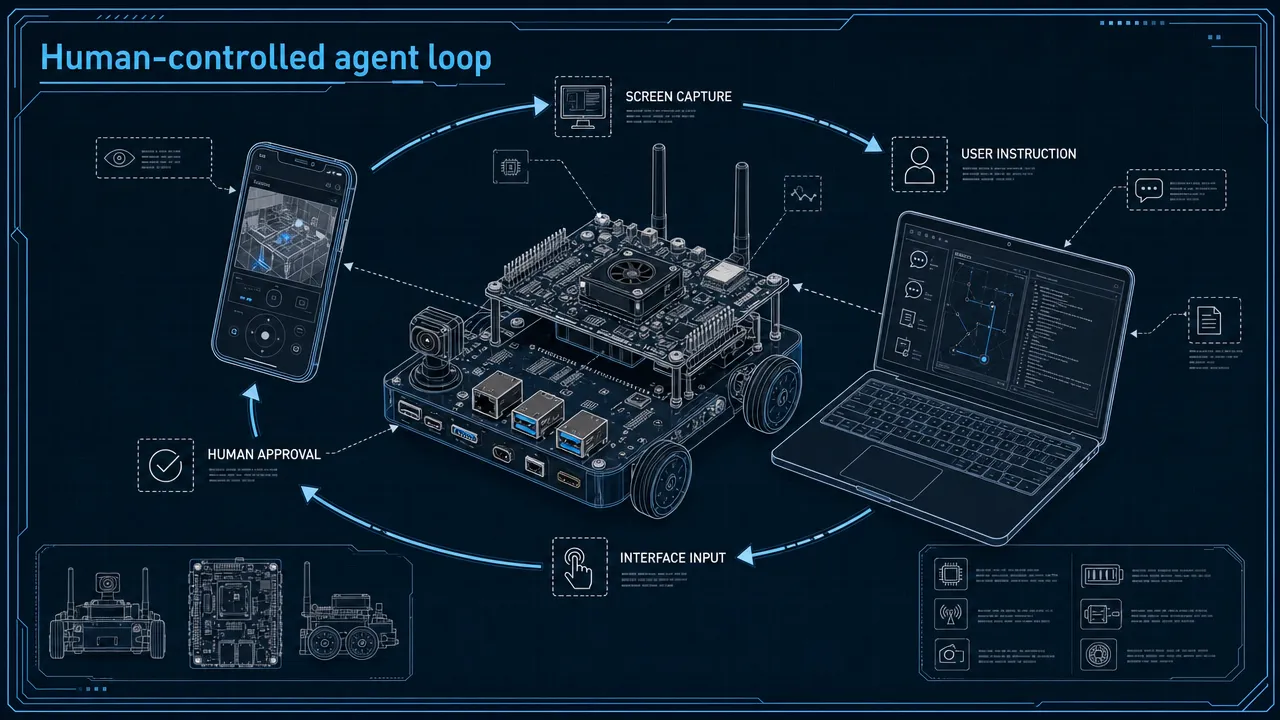
Hardware-Aware AI Agent Runtime

MCP, described in the Model Context Protocol documentation, is important because it points toward a more interoperable future. Instead of every agent framework building custom integrations for every tool and data source, protocols can standardize how agents connect to resources. That matters for the future of AI agents 2026 because tool access, permissions, and context boundaries are now part of the agent runtime.

Best AI agent frameworks 2026 for coding, productivity, and writing workflows

The best AI agent frameworks 2026 are also shaped by developer tools. Cursor vs GitHub Copilot 2026 is not just an editor debate. It shows how coding assistants are becoming coding agents: autocomplete becomes chat, chat becomes multi-file edits, multi-file edits become repo-aware task execution, and eventually agents connect to tests, code review, CI/CD, and documentation systems.

For coding agents, evaluate:

Evaluation area What to test
Repo understanding Can the agent follow project structure and dependencies?
Tool safety Can it run commands in a sandbox with scoped permissions?
Test behavior Does it create, run, and interpret tests correctly?
Review quality Can it identify security, performance, and maintainability risks?
Cost per completed task Does the agent save time after retries and review are included?

The same distinction applies to best AI writing tools 2026 and best AI productivity tools 2026. End-user tools may feel like agents, but frameworks are the infrastructure underneath. A writing tool can draft a campaign. An agent framework can orchestrate research, retrieval, drafting, review, approval, and publishing permissions. A productivity tool can summarize a meeting. An agent system can connect that summary to CRM updates, support tickets, project tasks, and compliance logs.

AI agent trends 2026 point toward more grounded, more observable, and more deployment-aware systems. Agentic RAG is becoming mainstream. Multi-agent workflows are becoming more practical. Browser and computer-use agents are expanding, but they require strict safeguards. On-device and edge agents are gaining attention because privacy, latency, and inference cost matter. For an AI agent hardware and software technology company such as aidenai.io, the important narrative is clear: agent software decisions increasingly depend on runtime infrastructure.

Best AI agent frameworks 2026 final recommendation

The best AI agent frameworks 2026 choice should follow a simple rule: use the lightest framework that still gives your team enough control, observability, and governance for the workload.

Use LangGraph when production state control is the priority. Use CrewAI when role-based multi-agent prototyping speed is the priority. Use Semantic Kernel when Microsoft ecosystem alignment matters. Use LlamaIndex or Haystack when retrieval and private knowledge are central. Use PydanticAI when type-safe Python development and structured validation matter. Use DSPy when optimization and evaluation of LM programs are more important than runtime orchestration.

For enterprise and hardware-aware deployments, do not stop at feature lists. Test the complete agent loop: model call, tool call, retrieval, approval, logging, failure recovery, cost, latency, and deployment environment. The winning framework is the one that keeps the agent useful when the demo becomes a real system.

Explore how AI agent software and hardware infrastructure can work together to support reliable, secure, and scalable agent deployments with a framework strategy that fits the workload rather than the trend cycle.

AI Briefing — 2026-05-26

2026-05-26


Summary

  • Paragon Health proposes a new safety framework for AI-enabled medical devices
  • Detectify launches MCP server enabling AI agents to find and fix vulnerabilities in real time
  • AI breakthrough provides unexpected solution to an 80-year-old mathematical problem
  • Google introduces Gemini Omni, expanding its AI model capabilities
  • Mistral AI expands partnership with Harvey AI to target the legal sector
  • South Korea’s deputy prime minister outlines plans for competitive advantage in physical AI
  • SoftBank Group shares reach record high driven by AI momentum and ARM performance
  • CFOs increasingly adopt AI as central component of their growth strategies

Paragon Health Proposes AI Medical Device Safety Framework

Paragon Health has unveiled a comprehensive safety framework designed specifically for AI-enabled medical devices. The proposal addresses growing concerns about regulatory standards and patient safety as AI increasingly integrates into healthcare technology. The framework aims to establish clear guidelines for development, testing, and deployment of AI-powered medical solutions.
Read Full Article: Today’s Medical Developments

Detectify Launches Real-Time AI Security Solution

Detectify has introduced an MCP server that enables AI agents to identify and remediate security vulnerabilities in real time. The platform represents a significant advancement in automated cybersecurity, allowing organizations to detect and fix potential threats before they can be exploited. This development marks a major step forward in AI-powered security infrastructure.
Read Full Article: SiliconANGLE

AI Solves 80-Year-Old Mathematical Challenge

The mathematics community is buzzing after an AI system successfully solved a problem that has stumped researchers for eight decades. This breakthrough demonstrates AI’s growing capability to tackle complex theoretical challenges previously thought to require human intuition. The solution has prompted renewed discussion about AI’s role in advancing mathematical research.
Read Full Article: The Conversation

Google Unveils Gemini Omni

Google has announced Gemini Omni, the latest addition to its Gemini family of AI models. The new model promises enhanced capabilities across multiple domains, positioning Google to compete more effectively in the rapidly evolving AI landscape. Gemini Omni represents Google’s continued investment in developing cutting-edge AI technology.
Read Full Article: blog.google

Mistral AI Partners with Harvey AI for Legal Sector

Mistral AI has significantly expanded its partnership with Harvey AI to penetrate the legal services market. The collaboration aims to bring advanced AI capabilities to law firms and legal departments, potentially transforming how legal research and document analysis are conducted. This strategic move positions both companies to capture a share of the growing legal tech market.
Read Full Article: WSJ

South Korea Targets Physical AI Leadership

South Korea’s deputy prime minister has outlined the country’s ambitious plans to establish a competitive advantage in physical AI technologies. The strategy focuses on developing AI systems that can interact with and manipulate the physical world, positioning South Korea as a leader in robotics and embodied AI. This initiative reflects the nation’s commitment to maintaining technological leadership.
Read Full Article: CNBC

SoftBank Shares Hit Record High on AI Optimism

SoftBank Group’s stock has reached an all-time high, driven by investor enthusiasm for AI and strong performance from its ARM holdings. The surge reflects growing confidence in SoftBank’s AI investment strategy and its portfolio of technology companies. Market analysts view this milestone as validation of SoftBank’s pivot toward AI-focused investments.
Read Full Article: Investing.com

CFOs Embrace AI for Strategic Growth

Chief Financial Officers are increasingly incorporating AI into their core growth strategies, according to new research. CFOs are leveraging AI for financial forecasting, risk management, and operational efficiency, marking a shift in how finance leaders approach technology adoption. This trend signals AI’s transition from experimental tool to essential business infrastructure.
Read Full Article: eMarketer