AI Agent Briefing — 2026-05-27
Summary
- AI coding agents introduce production risks through "vibe coding" practices that compromise deployment safety
- OpenSea launches ERC-8257 standard enabling NFT-based API access for AI agents
- New strategies emerge to balance rapid AI innovation with reducing security debt
- High costs of unmonitored AI agents drive demand for live telemetry solutions like Claude Code
- DuckDuckGo sees 30% install surge as users reject Google’s AI-powered search features
- Critical engineering infrastructure gaps hinder production-ready AI agent deployment
- Base introduces crypto wallet connectivity tools for AI agent integration
- JPMorgan research reveals AI agent deployment accelerating despite stagnant broader AI adoption
AI Coding Agents Create Production Deployment Risks
The emergence of AI coding agents has introduced a concerning trend called "vibe coding" that poses significant risks to production environments. This practice, where developers rely heavily on AI-generated code without thorough review, threatens deployment stability and security. Organizations are scrambling to implement better oversight and testing protocols to mitigate these emerging risks.
Read Full Article: HackerNoon
OpenSea Revolutionizes AI Agent Economics with ERC-8257
OpenSea has unveiled ERC-8257, an innovative standard that transforms how AI agents access tools and services. The platform creates a marketplace where purchasing NFTs unlocks specific APIs for AI agents, establishing a new economic model for agent capabilities. This approach could fundamentally change how developers monetize and distribute AI agent tools.
Read Full Article: 深潮TechFlow
Balancing Innovation Speed with AI Security Debt
Organizations face mounting pressure to innovate rapidly with AI while managing accumulating security debt. New frameworks propose practical paths to maintain innovation velocity while systematically reducing security vulnerabilities. The approach emphasizes continuous security integration rather than post-deployment patches, enabling sustainable AI development practices.
Read Full Article: cio.com
High Operational Costs Drive AI Agent Monitoring Solutions
The expensive nature of running AI agents unmonitored has sparked demand for sophisticated telemetry systems. Claude Code exemplifies this trend with live monitoring and analysis capabilities that help organizations control costs while maintaining performance. These tools provide real-time insights into agent behavior, resource consumption, and output quality.
Read Full Article: HackerNoon
Privacy-Focused Search Surges as Users Resist AI Integration
DuckDuckGo installations have jumped 30% as users actively reject Google’s AI-powered search features. This significant shift reflects growing user frustration with forced AI integration in search experiences. The trend signals a potential market fragmentation between AI-enhanced and traditional search preferences.
Read Full Article: TechCrunch
Critical Infrastructure Gaps Hinder Production AI Agents
The current engineering stack for production AI agents remains incomplete, creating significant deployment challenges. Missing components include robust orchestration layers, standardized testing frameworks, and reliable failover mechanisms. These infrastructure gaps prevent many organizations from moving AI agents from experimental to production environments.
Read Full Article: HackerNoon
Base Bridges Crypto Wallets and AI Agents
Base has launched groundbreaking tools that enable seamless connection between cryptocurrency wallets and AI agents. This integration allows AI agents to execute blockchain transactions, manage digital assets, and interact with decentralized applications. The development opens new possibilities for autonomous financial operations and Web3 integration.
Read Full Article: TradingView
JPMorgan Reveals AI Agent Boom Amid Broader Stagnation
JPMorgan’s latest analysis uncovers a striking divergence in AI adoption patterns, with agent deployment surging while general AI implementation plateaus. The research indicates organizations are prioritizing specialized AI agents over broad AI initiatives. This trend suggests a maturation in AI strategy, focusing on specific high-value use cases rather than blanket adoption.
Read Full Article: Crypto Briefing
Related posts

Unified Device Control Across iPhone, Android, and Desktop
Control iPhone, Android, macOS, Windows, and Linux with Aiden’s cross-platform device control. Explore the new firmware update today.
Embedded Package Management Without Rebuilding Firmware
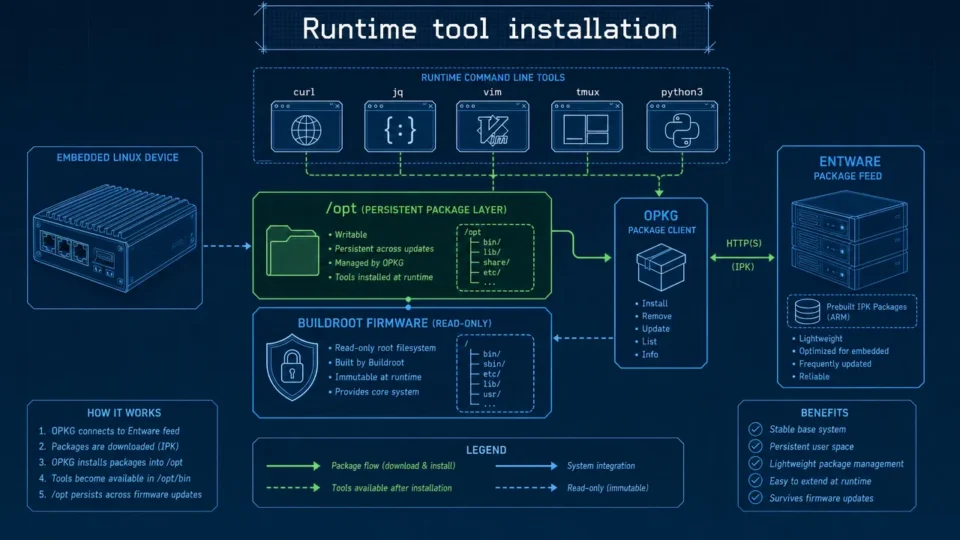
Embedded package management in Aiden Firmware uses OPKG and Entware to install approved tools at runtime while keeping Buildroot stable.
On-Device AI Briefing — 2026-08-17
On-device AI briefing: Apple-Alibaba China partnership, WhatsApp scam detection, Samsung health monitoring & agentic AI platforms.