Aiden Adds Smarter Notification Memory and One-Step Cleanup
Aiden Adds Smarter Notification Memory and One-Step Cleanup
Major Update: We merged PR #605, PR #613, PR #614, and PR #594. These firmware changes refine AI agent notification memory, add a deliberate one-step cleanup path, and improve lifecycle handling for cancellation-request state. The code is merged into the open-source Aiden firmware repository; its verification scope is described below.
Separating public information from personal facts
Notifications can contain very different kinds of information. A news alert may repeat public material, while a billing notice, delivery update, appointment, or device alert may carry a fact related to you. Treating both categories as the same type of memory makes it harder to keep the information that is useful to your ongoing tasks.
The updated extraction logic distinguishes public information from facts related to you. This gives the memory path a clearer basis for deciding what belongs in user-related notification history instead of treating everything in a notification as equivalent.
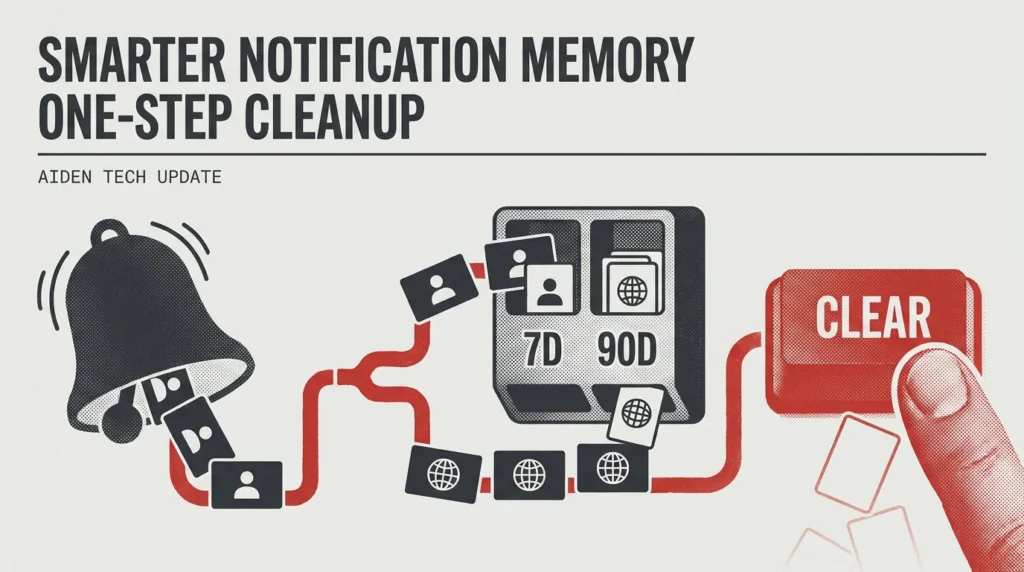
Retention is now explicit as well. Temporary notification memory follows a seven-day rule, while long-term notification memory follows a 90-day rule. These periods define the reviewed implementation’s boundaries; they do not mean that every notification is retained or that classification cannot make mistakes. For you, the practical change is a more bounded model for short-lived details and longer-lived personal information.
Cleanup stays under your control
The Web UI now gives you two confirmed choices: clear the current session, or clear the session together with memory. The selected scope is visible before the operation proceeds. Cleanup remains an action you request and confirm rather than an unattended background event.
At the API layer, the clear operation removes backend sessions and realtime-context sessions, then creates a clean root session. That root gives Aiden a defined place to continue after the previous session state has been removed.
The two choices let you match the reset to what you need. You can start a clean session without selecting the broader memory action, or explicitly clear both session and memory when that is the intended result. This makes AI agent memory cleanup easier to understand while keeping control with you.
Reclaiming completed cancellation state
The merged work also improves the lifecycle of cancellation-request tombstones. Aiden reclaims those markers after associated work finishes, during result cleanup, and at shutdown. This prevents completed cancellation state from continuing to grow indefinitely after the work it represents has reached its cleanup points.
The notification-classification work was verified on a development board for classification behavior and cursor advancement. The reviewed evidence does not claim a complete regression result, so this update does not infer broader validation beyond those documented checks.
Taken together, the changes establish clearer notification memory management: public information and personal facts are treated as distinct categories, temporary and long-term records have defined retention windows, cleanup requires your confirmed choice, and completed cancellation markers are reclaimed through their lifecycle.
This update does not claim support for notification sources or platforms beyond the reviewed facts, nor does it present the classification as infallible. You can inspect the linked pull requests for the merged implementation and follow Aiden’s continued open-source development.
Related posts
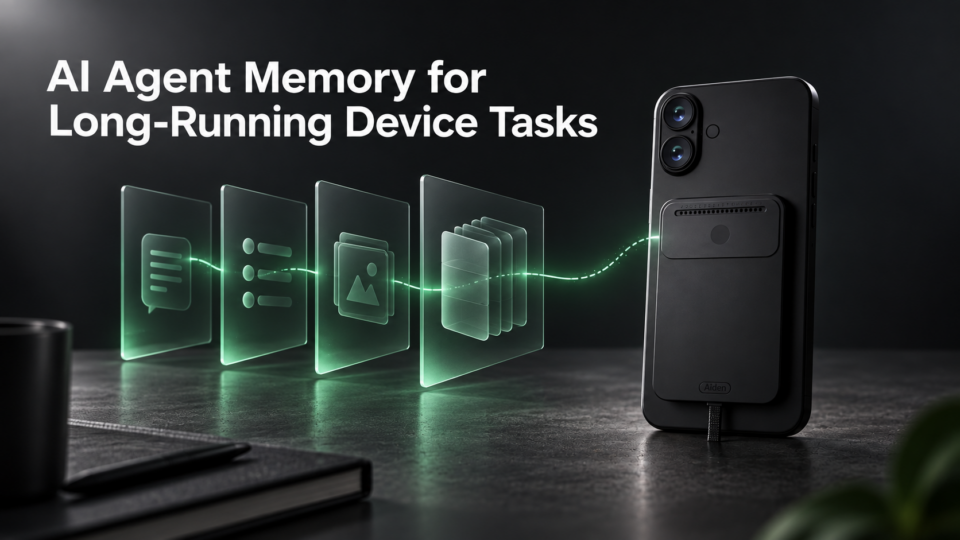
AI Agent Memory for Long-Running Device Tasks
Improve AI agent long task reliability with persistent memory for oversized tool outputs. Explore Aiden Firmware’s update now.
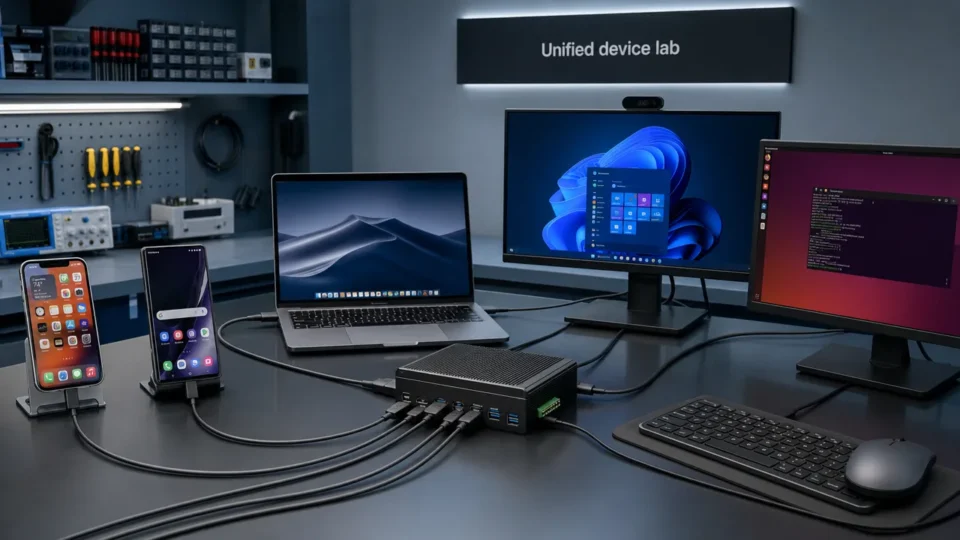
Unified Device Control Across iPhone, Android, and Desktop
Control iPhone, Android, macOS, Windows, and Linux with Aiden’s cross-platform device control. Explore the new firmware update today.
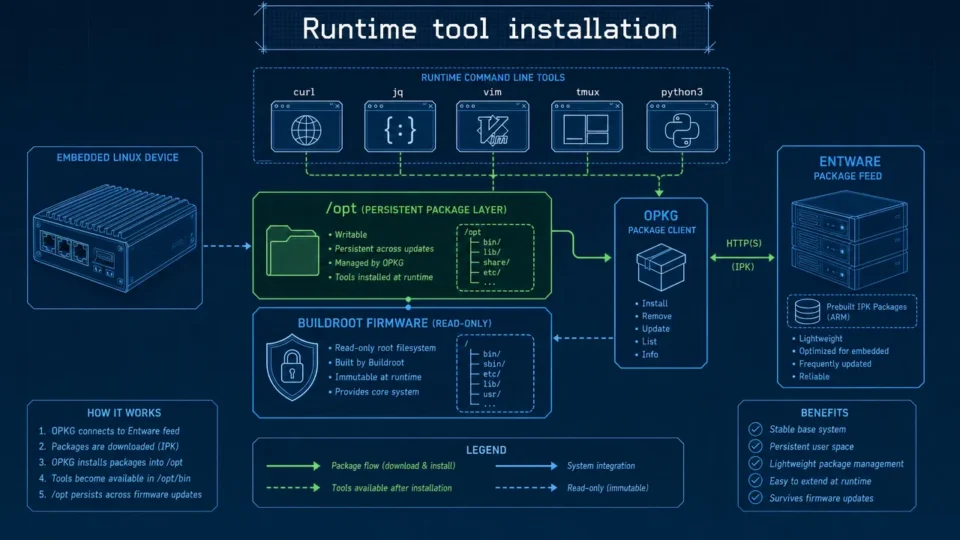
Embedded Package Management Without Rebuilding Firmware
Embedded package management in Aiden Firmware uses OPKG and Entware to install approved tools at runtime while keeping Buildroot stable.