Gemini vs Claude: Which AI Model Wins for Enterprise in 2026?
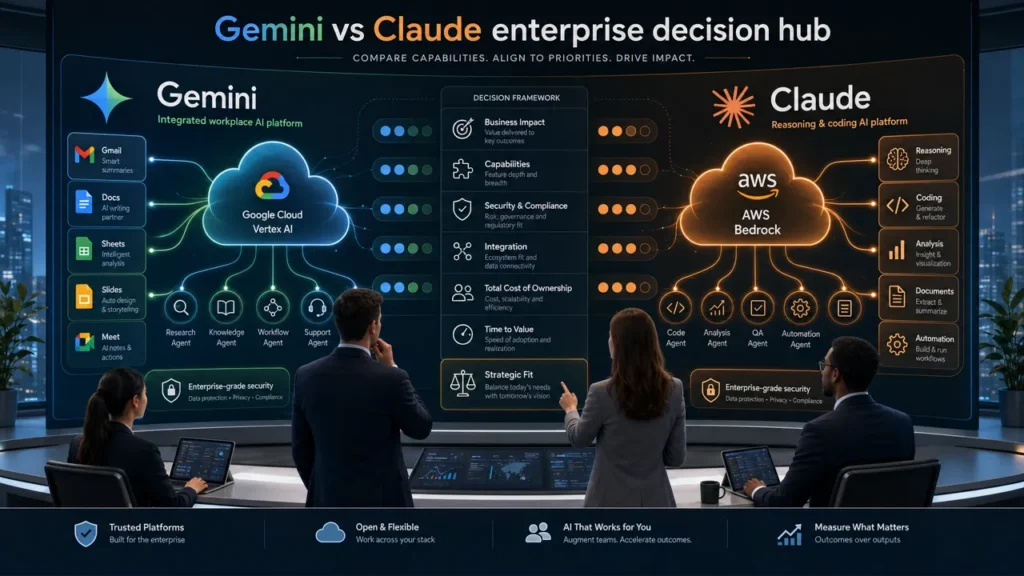
Gemini wins for Google-native enterprise integration, while Claude wins for safety-sensitive reasoning, coding, and multi-cloud flexibility — the best answer to "Gemini vs Claude enterprise 2026" is usually a workflow-by-workflow decision rather than a single-model mandate.
For enterprise leaders, the practical distinction is clear: Gemini is closer to a packaged business AI platform for organizations already invested in Google Workspace and Google Cloud, while Claude is a strong AI model for enterprise teams that need careful analysis, long-document reasoning, developer workflows, and flexible deployment through API or cloud partner channels. The strongest enterprise AI programs in 2026 will often use both, routing work to the model that best fits the task, risk profile, cost target, and integration layer.
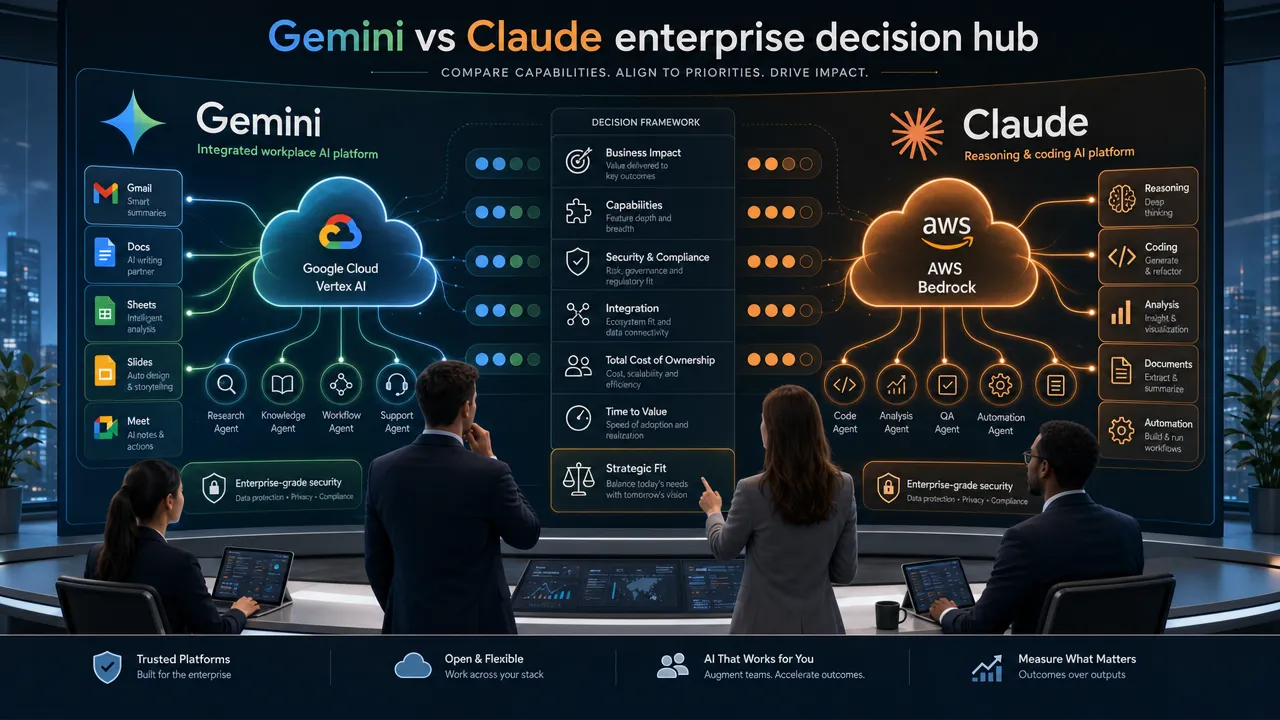
How Gemini vs Claude enterprise 2026 decisions should start with workflow fit, not model hype
A useful enterprise AI comparison starts with the work that must be improved. Public benchmarks can indicate model strength, but they do not answer whether a platform will respect permissions, connect to business systems, reduce employee friction, satisfy legal review, or control cost at scale.
For most organizations, the Gemini vs Claude decision has five enterprise dimensions:
| Enterprise criterion | Gemini advantage | Claude advantage | Buyer takeaway |
|---|---|---|---|
| Productivity suite integration | Strong fit for Google Workspace users | Less native to a full productivity suite | Choose Gemini first if Gmail, Docs, Drive, Meet, Sheets, and BigQuery are core workflows. |
| Cloud and deployment flexibility | Strongest inside Google Cloud and Vertex AI | Available through Claude API, Amazon Bedrock, and Vertex AI where supported | Choose Claude first for AWS-heavy or multi-cloud environments. |
| Knowledge work quality | Strong for Workspace-connected drafting and analysis | Strong reputation for careful reasoning, writing, and synthesis | Pilot both on legal, policy, executive, and research tasks. |
| Agent platform strategy | Google positions Gemini Enterprise as an agentic workplace platform | Strong for custom agent systems through API and coding workflows | Use Gemini for packaged agent workflows; use Claude where custom architecture matters. |
| Governance and procurement | Broad Google Cloud security and compliance ecosystem | Enterprise plan and cloud partner paths support controlled deployment | Legal and security teams must verify terms, logs, retention, and data use by product and contract. |
Google describes Gemini Enterprise as a workplace AI and agentic platform that brings models, company data, agents, and governance into one enterprise environment. The official Google Cloud announcement for Gemini Enterprise positions it as a "front door" for AI at work. Google also documents Gemini capabilities through Gemini API model documentation, Workspace AI, and Vertex AI generative AI documentation.
Claude, by contrast, is strongest when an enterprise wants careful language behavior, coding support, long-document reasoning, and flexible access. Anthropic’s Claude Enterprise help page describes the enterprise plan for organizations needing advanced security, compliance controls, and scalable AI across teams. The Claude model overview and Claude API documentation are the most useful official references for current capabilities, pricing signals, context windows, and developer integration.
For aidenai.io’s audience, the deeper point is that Gemini vs Claude enterprise 2026 is not only a chatbot comparison. It is an AI-agent infrastructure decision. Enterprise agents require model access, secure execution, identity controls, data connectors, observability, approval workflows, and hardware or software environments that can operate reliably under business constraints.
Gemini vs Claude enterprise 2026 comparison across integration, governance, agents, and deployment
Gemini is the stronger default choice when an organization already runs on Google Workspace, Google Cloud, BigQuery, Vertex AI, and Google identity or security tooling. Its advantage is distribution: AI can appear inside email, documents, meetings, spreadsheets, files, data platforms, developer workflows, and agent interfaces without requiring every team to adopt a separate application.
Claude is the stronger default choice when model behavior and deployment optionality matter more than suite integration. Enterprises often evaluate Claude for legal-style analysis, policy drafting, executive writing, software engineering, research synthesis, customer support knowledge work, and custom agent systems. Claude is also compelling where procurement through Amazon Bedrock or Google Cloud Vertex AI is preferred. AWS documents supported foundation models in Amazon Bedrock model documentation, while Google documents Claude availability through Vertex AI partner model documentation.
| Category | Gemini | Claude | Practical enterprise recommendation |
|---|---|---|---|
| Best enterprise fit | Google-native organizations | Multi-cloud, AWS-heavy, safety-sensitive, and developer-heavy organizations | Match the model to your architecture before comparing benchmark scores. |
| Workspace productivity | Very strong through Google Workspace | Strong through integrations, but less native | Gemini is usually the first pilot for Google Workspace users. |
| Long-context work | Strong long-context heritage; exact limits vary by model | Strong long-context capabilities; exact limits vary by model | Test with real internal documents, not synthetic examples. |
| Multimodal workflows | Stronger Google ecosystem for text, image, video, audio, and Workspace media use cases | Text and image input support varies by model | Gemini likely leads for broad enterprise multimodal work. |
| Coding | Gemini Code Assist and Google Cloud developer tooling | Claude Code and strong coding-agent positioning | Pilot both on internal repositories and developer workflows. |
| Agentic workflows | Strong packaged platform story through Gemini Enterprise | Strong for custom API-based agents and coding workflows | Gemini fits broad rollout; Claude fits custom agent architecture. |
| Procurement | Google Cloud, Vertex AI, Workspace, API | Claude API, Amazon Bedrock, Vertex AI where supported | Existing cloud commitments may decide the first pilot. |
| Security review | Google Cloud governance, compliance, and data controls | Claude Enterprise, API terms, and partner cloud controls | Verify data use, retention, logs, region, and auditability in writing. |
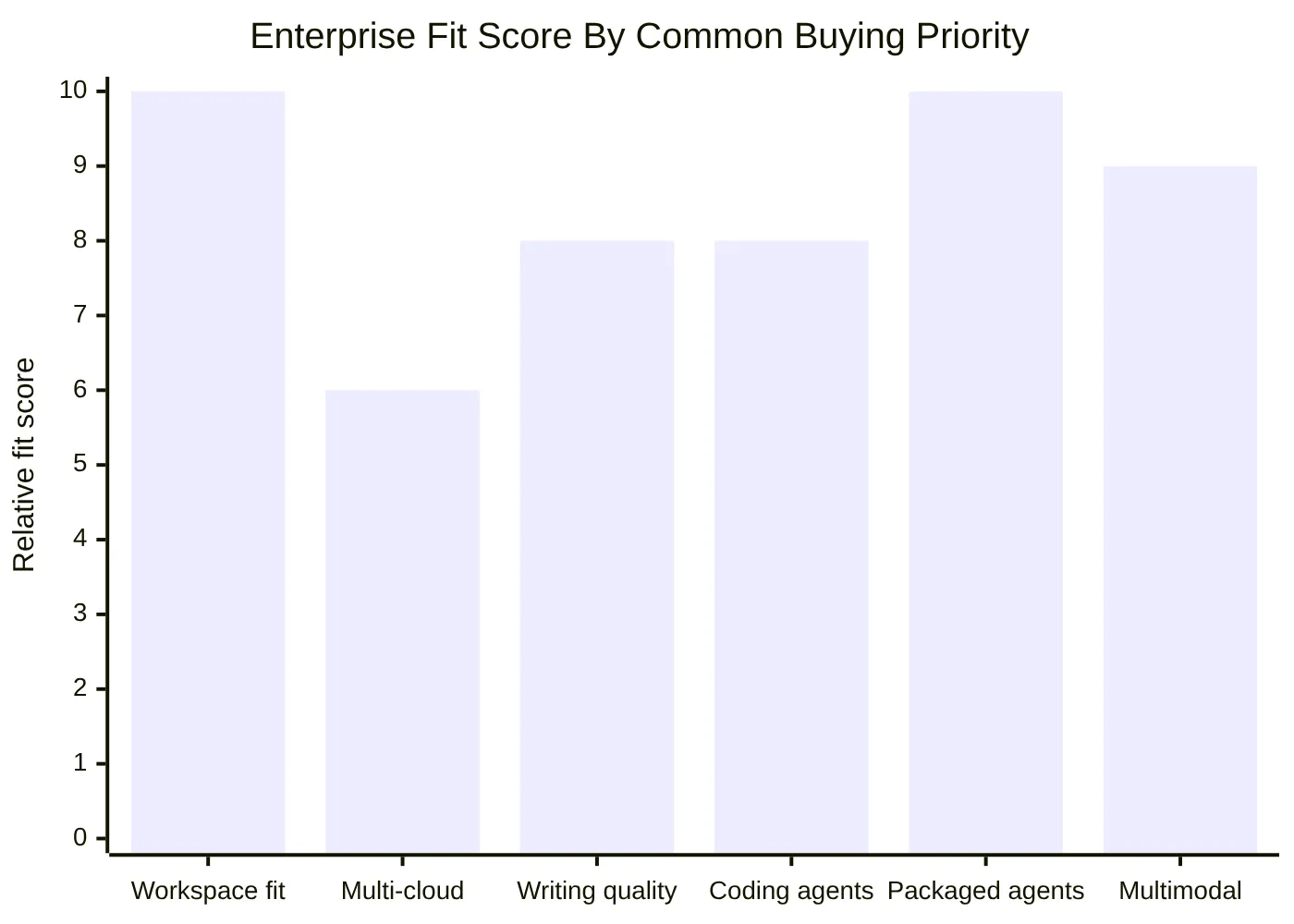
The chart above represents Gemini’s relative fit across common enterprise buying priorities, based on the research report’s qualitative findings. It is not a benchmark score. It reflects platform fit: Gemini is strongest where Google Workspace, Google Cloud, multimodal workflows, and packaged enterprise agents matter most.
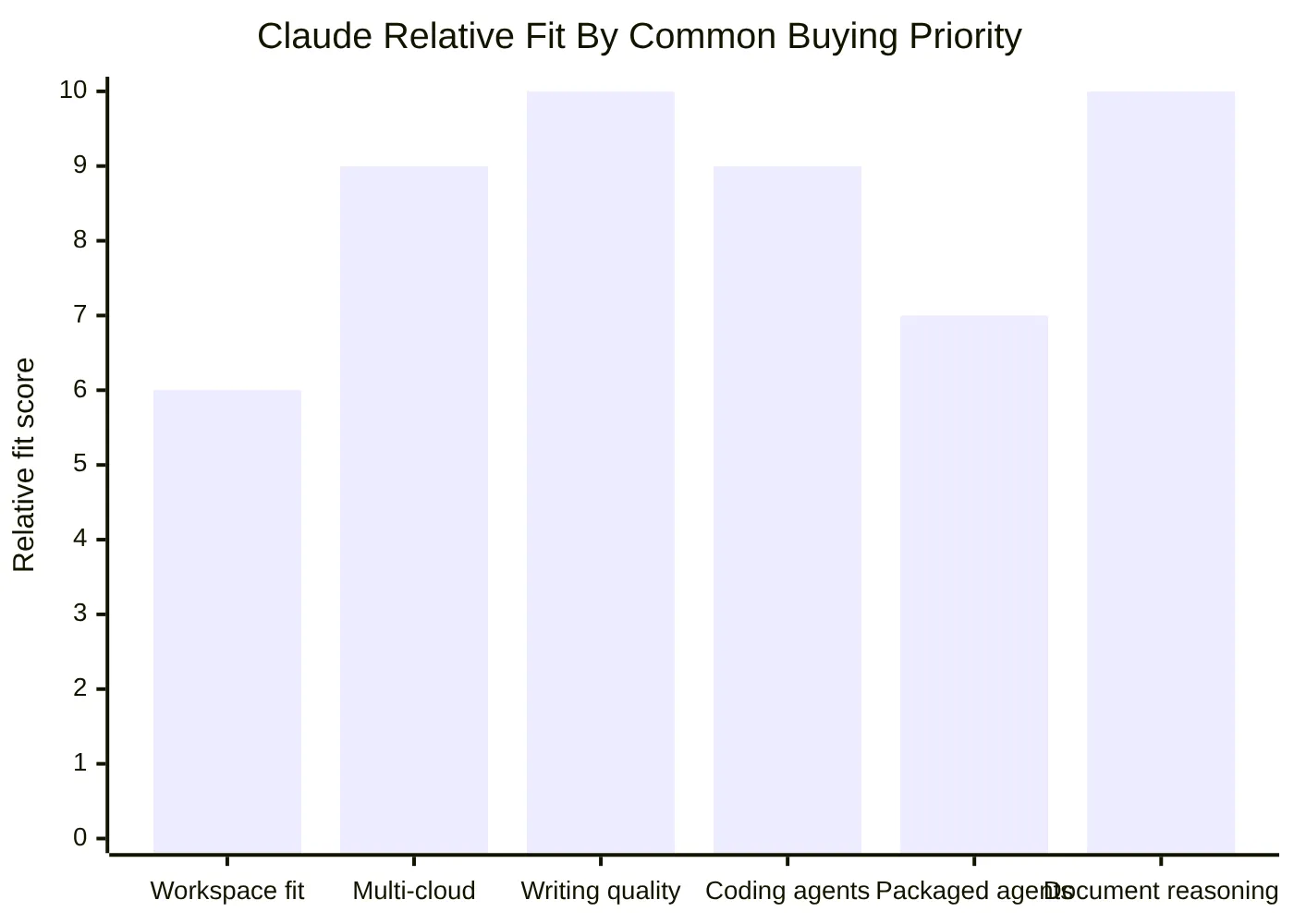
Claude’s relative fit is strongest in reasoning-heavy, writing-heavy, coding-heavy, and multi-cloud environments. This makes Claude a serious candidate for enterprise LLM comparison even when Gemini is already available inside Google workflows.
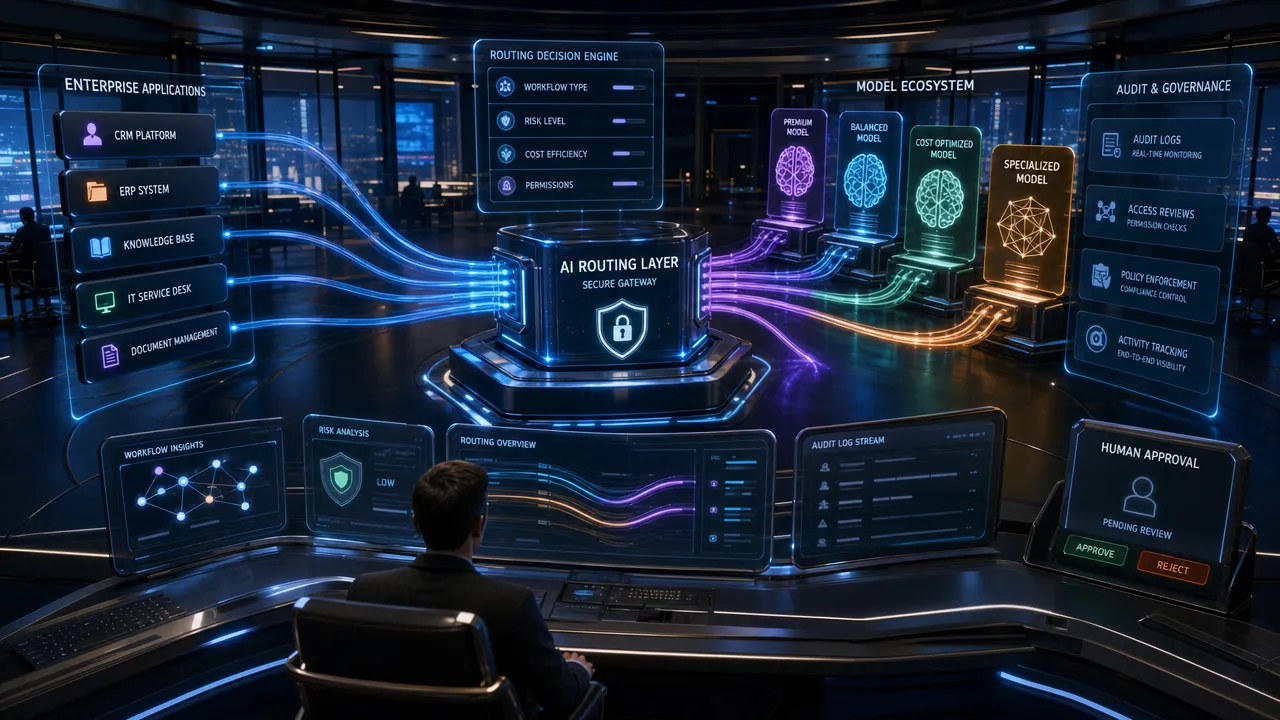
The most mature architecture is not always "Gemini or Claude." It is often a model portfolio with a routing layer. Productivity tasks may go to Gemini, document reasoning may go to Claude, coding tasks may be split between Gemini Code Assist and Claude-based workflows, and sensitive actions may require human approval regardless of model.
That model-portfolio view also reduces lock-in. Gemini can concentrate value inside Google’s ecosystem, while Claude can support model optionality across Anthropic’s API and partner clouds. Enterprises should treat this as a strategic design decision, especially if they are building AI assistants for enterprise teams or autonomous agent workflows.
Gemini vs Claude enterprise 2026 security, privacy, and compliance considerations
Security determines whether either model can move from pilot to production. Both Gemini and Claude can support enterprise use, but neither should be adopted without a rigorous review of data handling, access controls, logging, and contractual commitments.
For Gemini, key sources include Google Cloud generative AI data governance, Google Cloud compliance, Gemini Enterprise release notes, and Vertex AI pricing and platform information. These pages help buyers understand how Google frames governance, compliance, deployment, and commercial considerations.
For Claude, buyers should review the Claude Enterprise plan documentation, Claude API documentation, and Claude model overview. Deployment through AWS or Google Cloud also requires review of the relevant cloud marketplace, service, region, and contract terms.
Enterprise teams should ask the same hard questions of both vendors:
| Security question | Why it matters |
|---|---|
| Are prompts, outputs, uploaded files, retrieval data, and logs used for training? | Training and retention terms may vary by product, plan, endpoint, and contract. |
| Where is data stored and processed? | Data residency can be critical for regulated industries and global enterprises. |
| Are audit logs available and exportable? | Security teams need traceability for user actions, tool calls, and agent decisions. |
| Does the platform support SSO, SCIM, RBAC, and admin controls? | Enterprise rollout requires centralized identity and access management. |
| Can admins restrict models, connectors, tools, and data sources? | AI assistants must not access data beyond user permissions. |
| How are agent actions approved? | Autonomous or semi-autonomous workflows require human approval gates for high-impact actions. |
| What compliance certifications apply to the exact service being purchased? | Cloud-wide certifications do not automatically apply to every AI SKU or region. |
| Can logs and data be deleted or exported after termination? | Exit planning reduces vendor lock-in and legal risk. |
The biggest risk in enterprise AI is not that a model gives an imperfect answer. It is that the model is connected to business systems without adequate controls. Prompt injection, excessive permissions, unlogged tool calls, unclear retention, and uncontrolled long-context uploads can create real operational exposure.
For AI-agent infrastructure, governance must be designed into the system. That means least-privilege access, scoped tools, approval workflows, monitoring, incident response, and cost limits. An AI assistant for enterprise use should never be treated like a consumer chatbot with a corporate login.
Gemini vs Claude enterprise 2026 performance, pricing, and total cost of ownership
Performance evaluation should be based on internal tasks, not only on public leaderboards. Independent resources such as Artificial Analysis, LMArena, and the Stanford AI Index can provide useful market context, but enterprise results depend on prompts, retrieval design, data quality, workflows, integrations, latency targets, and user expectations.
A practical enterprise LLM comparison should test at least six areas:
- Accuracy on internal knowledge.
- Ability to cite or ground answers in approved sources.
- Performance on long documents and mixed file types.
- Coding quality on real repositories.
- Tool-use reliability and permission handling.
- Cost per completed business task, not only cost per token.
Pricing also requires care. Public API prices can help teams model pilots, but enterprise-wide total cost of ownership includes much more than tokens. Gemini buyers should consult Gemini API pricing, Vertex AI pricing, and Google Workspace pricing pages. Claude buyers should review the current pricing and capability details in the Claude model overview, plus any pricing available through cloud marketplace procurement.
Hidden TCO often includes:
| Cost category | Examples |
|---|---|
| Integration work | Data connectors, workflow apps, APIs, retrieval pipelines, identity systems |
| Security and legal review | Contract review, privacy assessment, compliance mapping, risk documentation |
| Operations | Monitoring, evaluation, incident response, support, admin overhead |
| Change management | Employee training, process redesign, adoption programs |
| Agent governance | Human approvals, audit logs, tool isolation, policy enforcement |
| Usage growth | Long-context prompts, tool calls, retries, parallel agents, high concurrency |
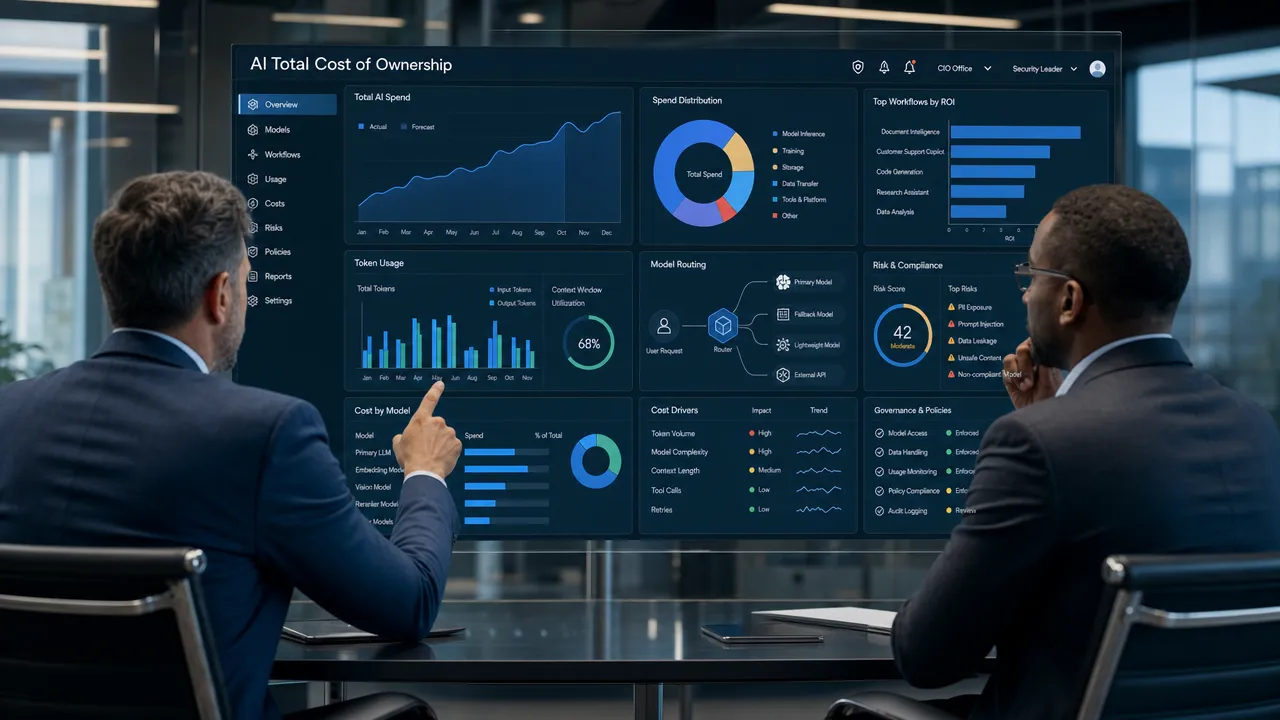
Gemini may deliver faster ROI when employees already work inside Google Workspace, because adoption friction is lower. Claude may deliver stronger ROI where the highest-value tasks involve dense reasoning, writing quality, code generation, policy review, or custom AI systems. The correct financial metric is cost per approved output, cost per resolved workflow, or hours saved per business process, not the lowest published token price.
A strong pilot should compare Gemini and Claude on the same workflows using the same evaluation criteria:
| Pilot dimension | What to measure |
|---|---|
| Quality | Accuracy, completeness, reasoning, tone, and source grounding |
| Reliability | Failure rate, hallucination rate, consistency, and recovery behavior |
| Speed | Latency per task and time saved by employees |
| Cost | API cost, seat cost, integration cost, and support cost |
| Governance | Logging, permissions, data retention, and approval controls |
| Adoption | User satisfaction, repeat usage, and workflow completion rate |
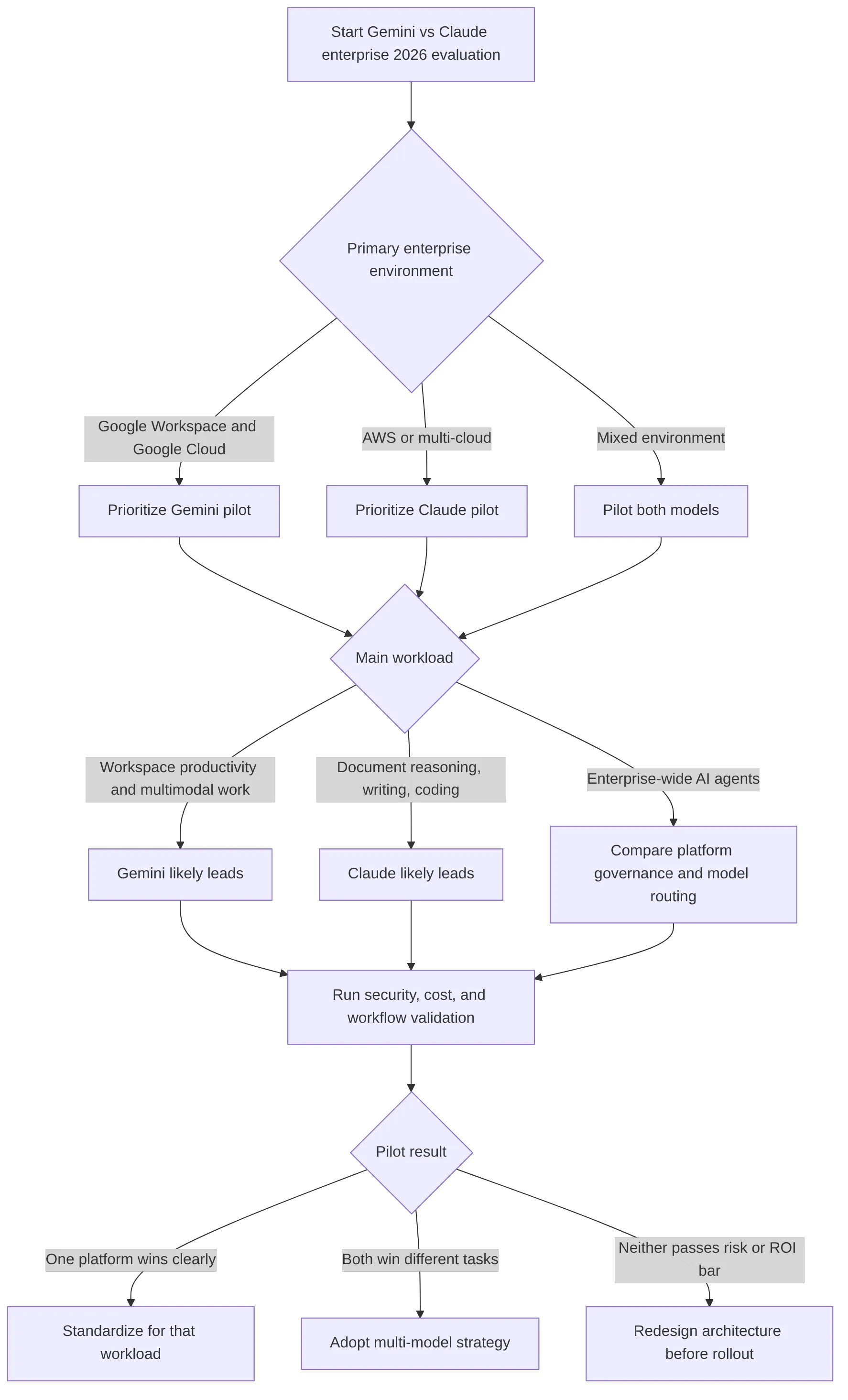
Gemini vs Claude enterprise 2026 decision framework for AI-agent infrastructure
The final verdict is straightforward: choose Gemini when platform integration is the main value driver, choose Claude when reasoning quality and deployment flexibility are the main value drivers, and choose both when enterprise AI needs vary across departments.
Choose Gemini if:
- Your company is standardized on Google Workspace.
- Google Cloud, BigQuery, and Vertex AI are strategic platforms.
- You want a business AI platform embedded in daily work.
- Multimodal workflows across documents, meetings, media, and data are important.
- You want a packaged enterprise agent platform with governance controls.
- Your teams need AI inside Gmail, Docs, Sheets, Slides, Meet, Drive, and related workflows.
Choose Claude if:
- Your priority is careful reasoning, writing, research, or long-document analysis.
- Your developers want strong coding-agent workflows.
- You need flexible deployment through API, Amazon Bedrock, or Vertex AI where supported.
- Your architecture is AWS-heavy or multi-cloud.
- You are building custom AI assistants or agent systems.
- Your organization values model optionality over full-suite standardization.
Choose both if:
- Business users live in Google Workspace, but developers prefer Claude.
- You need one model for productivity and another for reasoning-heavy work.
- You want to reduce vendor lock-in.
- Different departments have different governance and performance requirements.
- You are building enterprise agents that route tasks by risk, cost, and capability.
For aidenai.io, the most important strategic lesson is that AI model selection must be connected to AI-agent infrastructure. Enterprises do not only need a smart model. They need a secure runtime, permission-aware tool access, audit logs, observability, human-in-the-loop controls, cost governance, and a way to route tasks across models when business conditions change.
A simple evaluation scorecard can keep procurement grounded:
| Decision factor | Weighting guidance | Gemini likely edge | Claude likely edge |
|---|---|---|---|
| Existing platform fit | High | Google Workspace and Google Cloud | AWS, multi-cloud, custom API architecture |
| Knowledge work quality | High | Workspace-connected productivity | Careful reasoning and polished writing |
| Developer productivity | Medium to high | Google Cloud-native development | Coding-agent workflows |
| Agent readiness | High | Packaged enterprise agent platform | Custom agent systems and model flexibility |
| Governance | High | Google Cloud compliance ecosystem | Enterprise plan and partner-cloud deployment paths |
| TCO | High | Suite bundling and Google consolidation | Task-specific ROI and deployment optionality |
| Lock-in risk | Medium | Higher if adopting full Google stack | Lower cloud lock-in, but still model dependency |
The safest enterprise approach is not to crown a universal winner. It is to build an evaluation harness, test both models on real workflows, review security and legal terms, estimate TCO, and decide by use case.
For the core query "Gemini vs Claude enterprise 2026," the answer is:
Gemini is the better enterprise AI model choice for Google-native businesses that want integrated workplace AI, multimodal productivity, Google Cloud alignment, and packaged agent workflows. Claude is the better choice for enterprises that prioritize careful reasoning, writing quality, coding workflows, long-document analysis, and flexible deployment across API and cloud partner environments. Large enterprises should often use both as part of a governed model portfolio.
That is also the direction enterprise AI is moving. The winning AI model for enterprise use in 2026 is rarely just the model with the best demo. It is the model, platform, and infrastructure combination that lets people and agents do useful work securely, measurably, and repeatedly.
For teams building agent infrastructure on top of these models, see Why Most AI Agents Fail in Production and How to Build an AI Agent for Your Business Without Writing Code for practical implementation guidance.
Related posts
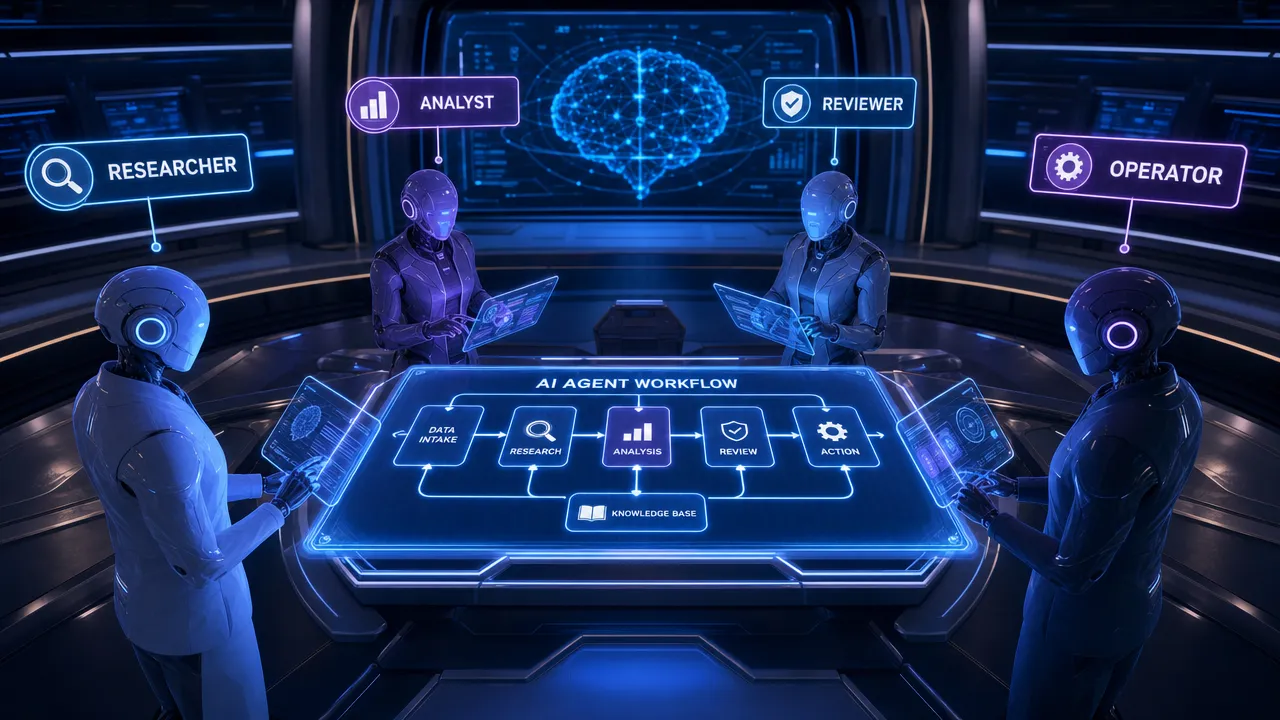
Why CrewAI beats LangChain for multi-agent work
CrewAI vs LangChain compared by workflow shape, showing when role-based agents beat graph orchestration for multi-agent systems.
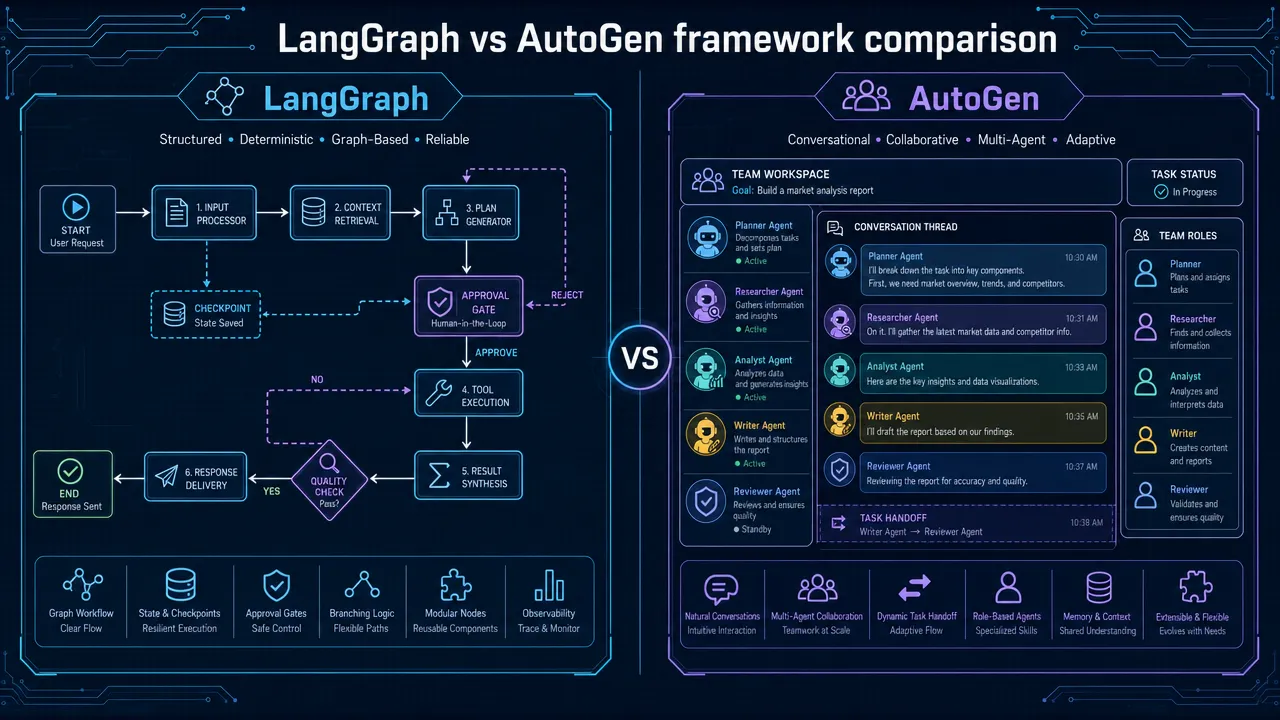
LangGraph vs AutoGen: Which AI Agent Framework Handles Complex Workflows in 2026?
LangGraph vs AutoGen comparison: assess state, checkpoints, human review, and collaboration to choose the right AI agent framework

Claude vs GPT-5 for Business Automation
Business automation AI comparison of Claude vs GPT-5 using workflow fit, governance, tools, and agent evaluation criteria for ROI.